Review · WILLIAMSBURG
1 Hour Christmastide Walking Tour in Virginia Past and Present
Colonial Williamsburg’s Christmas decorations are the star here. Instead of simply admiring lights and greenery, you’ll stop at several carefully dressed historic buildings and hear how the holiday looked in 18th-century Virginia. Guide Lonnie Sandifer ties those displays to modern Christmas customs with stories that are both heartfelt and lightly humorous.
I like the short one-hour format, which gives you a useful introduction without taking over your whole day. I also like the practical decoration tips, especially the chance to learn how to make versions of Colonial Williamsburg’s handmade displays yourself. The main concern is meeting up: signage around Williamsburg can be limited, and one person missed the tour after having trouble finding the start point and parking.
Key points at a glance
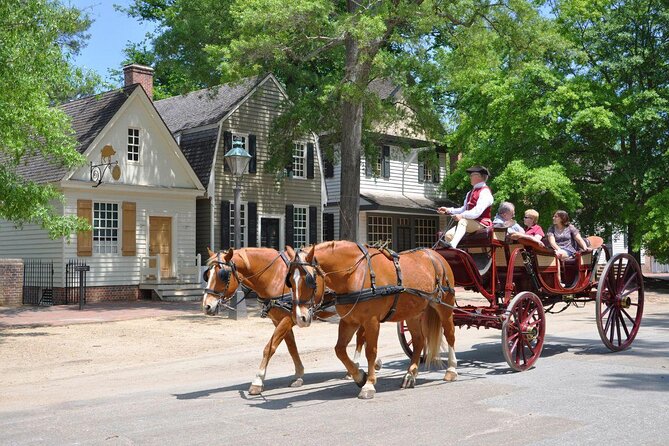
- Handmade Christmas displays: See distinctive greenery and seasonal decorations at several Colonial Williamsburg buildings.
- A clear 18th-century connection: Learn how Christmas was observed in colonial Virginia and how later traditions began to take shape.
- A practical creative angle: Get tips for making similar decorations at home.
- Compact walking route: The tour takes about one hour, from Bruton Parish Episcopal Church to Raleigh Tavern Bakery.
- Small maximum group: The tour is limited to 25 people, though the actual group size can vary.
- Good value for a first look: At $25 per person, it works well as a focused introduction before you explore more of Williamsburg on your own.
Why this Christmas walk is worth your hour
This is not a tour built around entering grand rooms or ticking off every Colonial Williamsburg landmark. It is an outdoor stroll centered on Christmas decoration, seasonal customs, and the way Virginia’s holiday traditions developed.
That focus gives the experience a pleasant sense of purpose. You are not just walking down Duke of Gloucester Street while someone recites dates. You are looking at specific wreaths, garlands, and arrangements while hearing why they matter. The guide also explains how to recreate similar decorations, which gives you something useful to take home beyond a few photographs.
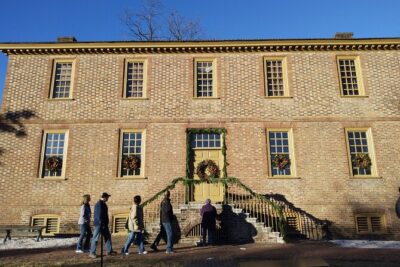
I especially like the contrast between old and new. At Bruton Parish Episcopal Church, you hear about Christmas in the 18th century. At St. George Tucker House, the conversation shifts toward the beginnings of modern Christmas traditions in Virginia. The result is a simple timeline told through places and objects rather than a long classroom lecture.
The price is $25 per person. For a one-hour tour, that is not a bargain in the strictest sense, but the value depends on what you want. If you are already planning to spend time in Colonial Williamsburg during the Christmas season, this gives you a guided way to notice details you could easily walk past. If you want a long historical tour or extensive interior access, you may find the experience too brief.
More Christmas Walking Tours in the USA
- Brooklyn: Dyker Heights Christmas Walking Tour
★ 4.5 · 249 reviews - New York Christmas Holiday Small-Group Walking Tour
★ 4.5 · 69 reviews - Chicago-Style Holiday Hike: Festive Food and Walking Tour
★ 5.0 · 68 reviews
Starting at Bruton Parish Episcopal Church
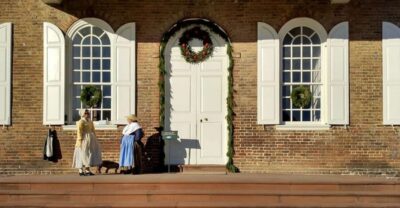
The tour begins at Bruton Parish Episcopal Church, at 201 West Duke of Gloucester Street. This first stop lasts about 10 minutes and sets up the central question of the walk: what did Christmas mean in 18th-century Virginia?
Your guide discusses how Christmas was celebrated during that period and points out the church’s seasonal decorations. The church is a fitting opening stop because it places Christmas in a religious and historical setting before the tour moves into household decoration and modern customs.
You should expect to remain outside the scheduled historic sites. The experience focuses on the exterior decorations and the stories connected to them, rather than on a detailed visit inside the church. That is important if you are hoping for interior sightseeing.
Arrive with enough time to identify the church and group. The meeting point is specific, but one poor experience resulted from difficulty finding the location and parking. Williamsburg’s signs may not always make the start obvious, so check the address before setting out and allow extra time to get oriented.
The John Greenhow Store and the art of colonial decoration
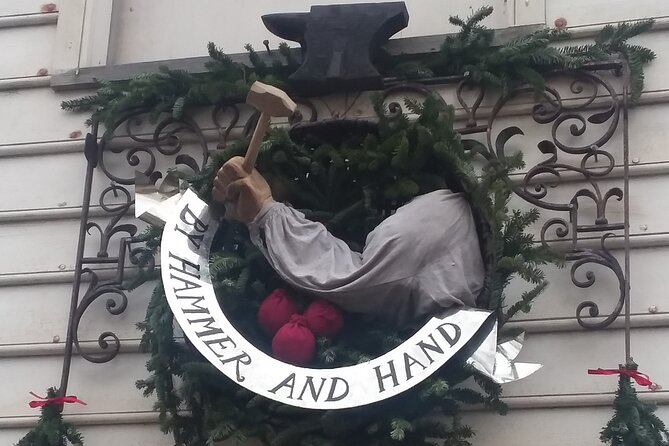
The next stop is the John Greenhow Store on West Duke of Gloucester Street. You spend about five minutes here, viewing one of Colonial Williamsburg’s most recognizable Christmas decorations.
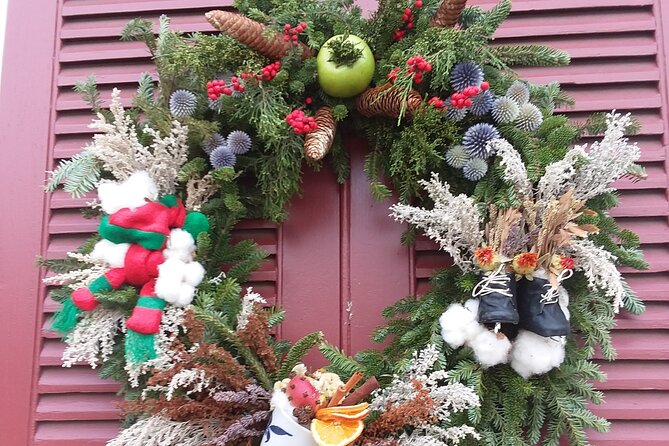
The useful part is not only the display itself. Lonnie explains how you might make something similar at home, turning the stop into a short lesson in seasonal craft. You will not receive a separate workshop, but the advice adds a practical layer to the sightseeing.
This is also a good moment to pay attention to scale and materials. The decoration is meant to be seen as part of a historic building, so your guide’s explanation helps you understand why a simple arrangement can have such a strong visual effect. You may see more detail in a few minutes with a guide than you would on your own while walking past.
The stop is brief, so keep your camera ready and listen closely. The tour moves at a steady pace rather than lingering for long stretches at each building.
A photo stop at the Roscow Cole House
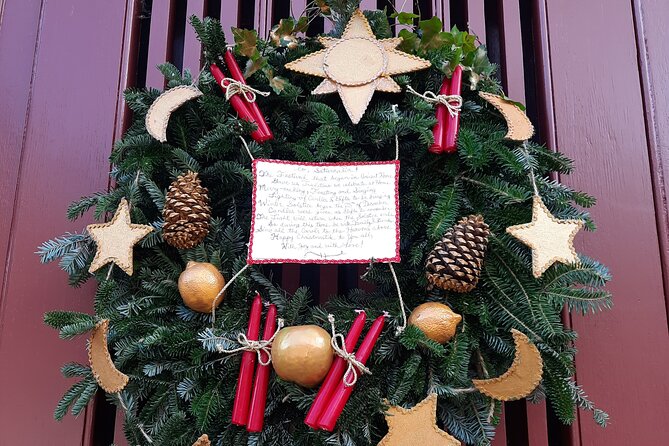
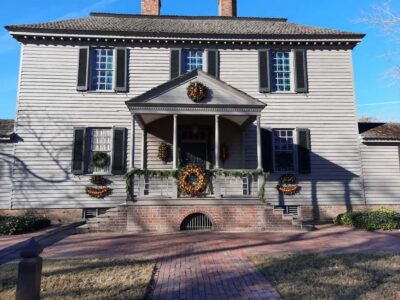
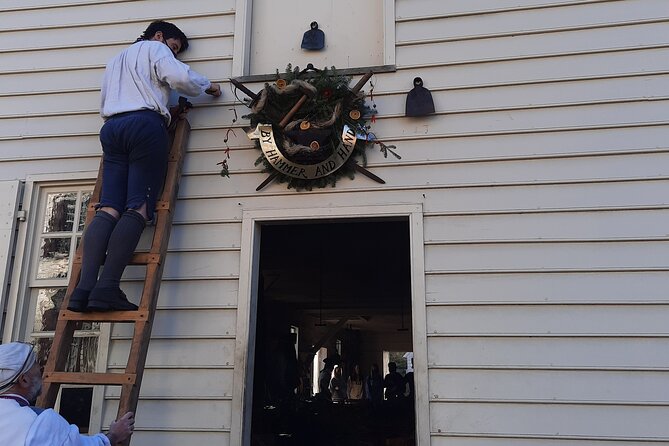
The Roscow Cole House provides another 10-minute stop and another signature Colonial Williamsburg Christmas decoration. Here, the emphasis is partly visual and partly personal: you get a distinctive photo opportunity while hearing what makes the display special.
I like this stop because it breaks up the historical explanation with something concrete and easy to enjoy. You can take a picture, compare the decoration with the earlier one, and start to notice that Colonial Williamsburg’s Christmas style is not just a string of lights. It is built around handmade arrangements that suit the architecture.
The photo opportunity is useful for families and anyone who wants a record of the seasonal visit. Still, this is a guided stop, not an open-ended photography session. If you want detailed shots, you may need to work quickly or return later on your own.
Same season, another way to celebrate it:
- NYC: Dyker Heights Christmas Lights & Skyline View Bus Tour
★ 4.7 · 1,192 reviews - Dyker Heights Christmas Lights Guided Tour
★ 4.5 · 920 reviews - New York City: Dyker Heights Christmas Lights Tour
★ 4.4 · 838 reviews - From Manhattan: 4-Hour Brooklyn Christmas Magic Tour
★ 4.4 · 606 reviews
St. George Tucker House and Virginia’s modern Christmas
At St. George Tucker House, the tour spends about five minutes looking at how modern Christmas traditions began in Virginia. This is the point where the walk moves beyond the colonial period and starts connecting the past with the holiday you recognize today.
That transition gives the tour its strongest historical idea. Christmas customs were not frozen in the 18th century. They changed over time, and Virginia became part of that change. You hear the story while standing among the seasonal decorations, so the subject stays tied to a real place rather than becoming an abstract history lesson.
Do not expect a full survey of every American Christmas custom. The provided route gives this subject one short stop, so the treatment is an introduction. If you want a detailed history of Christmas in Virginia, you will need a longer program or additional reading.
Duke of Gloucester Street, where the walk slows down
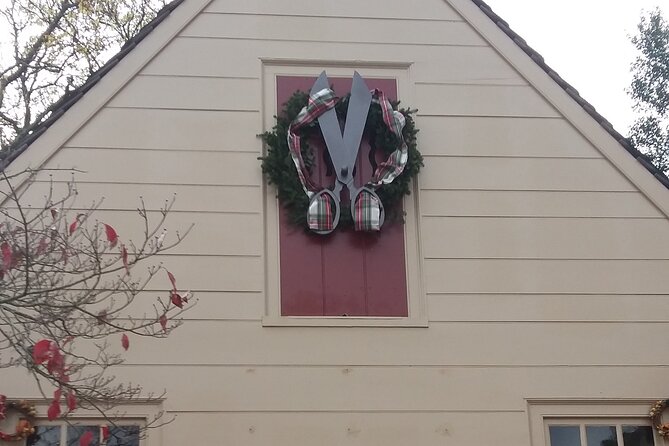
The longest portion of the tour is a leisurely stroll along Duke of Gloucester Street. About 20 minutes are set aside for the walk and for stories outside the main stops.
This is where the experience gains its relaxed character. Instead of rushing from one address to another, you have time to see several handmade decorations and hear humorous and heartfelt stories connected with Christmas in both the 18th century and the modern period.
The word leisurely matters here. You are walking, but this is not a demanding hike. The route is short, public, and near public transportation. Most people can participate, and service animals are allowed. Even so, you should dress for the weather because the tour takes place outdoors.
The open-air format is both a strength and a limitation. You get to see Colonial Williamsburg during its Christmas season as a functioning public setting, with buildings and decorations viewed from the street. You do not get the shelter or close interior detail that an indoor tour provides.
For me, this street section is likely to be the most memorable part if you enjoy atmosphere and storytelling. The guide has room to connect one decoration to another and to explain how the season is presented across several buildings. It also gives you a chance to decide which places you want to revisit after the tour.
Finishing near Raleigh Tavern Bakery
The tour ends near Raleigh Tavern Bakery, at 410 East Duke of Gloucester Street. The final stop lasts about five minutes and closes with a reminder of the meaning of Christmas.
That ending sounds simple, but it fits the tone of the experience. After looking at decorations and hearing about changing traditions, the tour finishes with a more reflective note rather than one last burst of facts.
The end point is useful for planning the rest of your day. You can continue exploring Colonial Williamsburg, find something to eat nearby, or return to a decoration that caught your attention. The walk does not try to fill your entire schedule, and that is one of its better features.
Remember that the end is near Raleigh Tavern, not back at Bruton Parish Church. If you have arranged transportation, plan around the one-way route.
What the guide adds to the decorations
The displays are attractive on their own, but the guide’s role is to explain why you are looking at them. Lonnie Sandifer is identified as the guide connected with the tour, and the strongest comments about the experience focus on his ability to explain the decorations and place them in their period.
That matters because handmade holiday displays can look familiar at first glance. A wreath is still a wreath, and greenery is still greenery. The historical context helps you notice the choices behind each arrangement and understand how seasonal decoration fits the setting.
The tone also appears to balance information with warmth. You hear humorous stories alongside more heartfelt ones, which keeps the hour from feeling stiff. This is a good match if you like history presented through human stories rather than a long list of names and dates.
At the same time, the tour depends heavily on communication between guide and group. Since much of the value comes from spoken explanation, stay close enough to hear and be ready for the group to move after each short stop.
Who will get the most from this tour
I would recommend this walk to you if Christmas decoration is a major reason for visiting Williamsburg. It is also a smart choice if you want a short orientation before spending the rest of your day exploring independently.
Families may appreciate the manageable length and the visual stops. People who enjoy crafts will get extra value from the advice on making similar decorations. History fans will like the movement from 18th-century customs to modern Virginia traditions, though anyone seeking a more detailed historical treatment may want a longer tour.
The experience is less suitable if you want extensive indoor access, a full-day Colonial Williamsburg overview, or a highly detailed architectural tour. The route is focused and intentionally brief.
A maximum of 25 people keeps the group from becoming extremely large, but it does not guarantee a tiny group. If you prefer private guiding, this format may not meet your expectations.
Price, timing, and planning advice
At $25 per person, the tour costs more than a self-guided walk, but it gives you a clear route and a human explanation of the decorations. I see the best value when you treat it as a seasonal introduction, not as a complete Colonial Williamsburg admission experience.
The tour lasts about one hour. That makes it easy to fit before lunch, after another activity, or at the beginning of a longer visit. Since the tour ends in a different place from where it begins, leave room in your plans for the one-way walk.
The experience is offered in English and uses a mobile ticket. Confirmation is provided when you book. It is typically booked about 15 days ahead, so you may want to reserve before your visit if your Christmas dates are fixed.
Free cancellation is available up to 24 hours before the start time. Changes or cancellations made less than 24 hours before the start are not accepted for a refund. The cut-off uses Williamsburg local time.
Parking and wayfinding deserve special attention. One person missed the tour after struggling with parking and finding the meeting point, while the guide stated that the listed address was correct and waited 30 minutes. I would use the exact Bruton Parish address, plan parking early, and avoid arriving at the last minute.
Should you book this Christmas walk?
Book it if you want a focused, friendly one-hour stroll that explains Colonial Williamsburg’s Christmas decorations instead of merely showing them to you. The handmade displays, decoration tips, and shift from colonial customs to modern Virginia traditions give the tour more substance than a basic holiday walk.
Skip it if you need indoor sightseeing, a long historical lecture, or a full overview of Williamsburg. Also think twice if parking and finding a precise meeting point will be stressful for you.
For most visitors already planning a Christmas-season visit, I see this as a useful add-on. It gives you a route, a few good photo stops, and enough background to make your later walk along Duke of Gloucester Street more rewarding.
FAQ
How long does the Christmastide walking tour last?
The tour lasts approximately one hour.
Where does the tour begin?
It begins at Bruton Parish Episcopal Church, 201 West Duke of Gloucester Street, Williamsburg, Virginia 23185.
Where does the tour end?
It ends near Raleigh Tavern Bakery, 410 East Duke of Gloucester Street. The tour typically finishes near the Raleigh Tavern.
What language is the tour offered in?
The tour is offered in English.
How much does the tour cost?
The listed price is $25 per person.
What Christmas decorations will I see?
The route includes decorations at Bruton Parish Episcopal Church, the John Greenhow Store, the Roscow Cole House, St. George Tucker House, and along Duke of Gloucester Street.
Does the tour explain how to make similar decorations?
Yes. The experience includes tips and tricks for making similar Christmas decorations yourself.
How large can the tour group be?
The activity has a maximum of 25 participants.
Can I cancel for a full refund?
Yes, if you cancel at least 24 hours before the experience start time. Cancellations or changes made less than 24 hours before the start are not accepted for a refund.
New this season in the USA
- Private New York City Christmas Walking Tour★ 3.5 · 5 reviews
- New York Christmas Holiday Lights Walking Tour★ 5.0 · 8 reviews
- Skip the Line: New Year’s Eve with Shake Rattle and Roll Dueling Pianos Ticket★ 4.5 · 2 reviews
- New York City Christmas Holiday Lights Sightseeing Cruise★ 5.0 · 4 reviews
- NYC: Dyker Heights Christmas Lights Express from Times Square★ 5.0 · 2 reviews
- Ultimate NYC Christmas Lights At Night Walking Tour★ 5.0 · 2 reviews
- New Years Eve Speakeasy Drinks and Ball Drop Tour NYC★ 4.0 · 3 reviews
- NYC: Dyker Heights Christmas Lights Express Hot Coco+Santa Cookie★ 3.0 · 4 reviews
Williamsburg Christmas Tours, side by side.
Private Colonial Williamsburg Christmas Holiday Decorations Walking Tour
Read our review →