
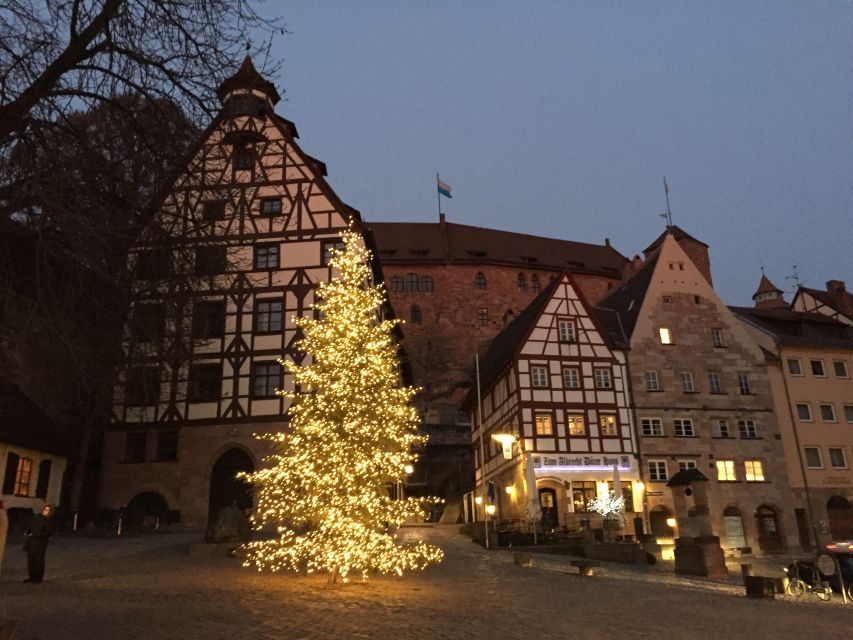
Review · GERMANY
Nuremberg: Christmas City Culinary Tour
Nuremberg’s Christmas market is more than rows of wooden stalls. This two-hour food walk explains why the city’s Christmas traditions are so famous, then gives you a practical introduction to the treats sold in several different markets. You’ll taste sausage, Lebkugel, and hot wine while walking from the Fleisch Bridge toward the main square, the children’s market, the international market, and the partner-city stalls.
I like two things in particular. First, the tour gives you a useful map of the market before you shop on your own. Second, the guides bring the traditions to life with stories about the Christ Child tradition, old stalls, and the way German Christmas markets developed. The main drawback is the crowded central market, where it can be hard to hear and move between food stops.
Key points
- Four market areas in two hours: Visit the main market, children’s market, international market, and partner-city market.
- Food and drinks are included: Expect seasonal samples such as sausage, Lebkugel, and hot wine.
- Strong local guiding: Guides including Claudia, Justina, Martina, and Justine have been praised for clear explanations and friendly care.
- Useful for a return visit: The route helps you remember where to go when you come back to shop or eat independently.
- Central finish: End near St. Sebald Church and Nuremberg Town Hall, with drop-off at the Hauptmarkt or Rathaus.
- Plan for winter conditions: Wear warm clothing and comfortable shoes. The tour runs in rain or shine.
Why this food walk helps you understand Nuremberg
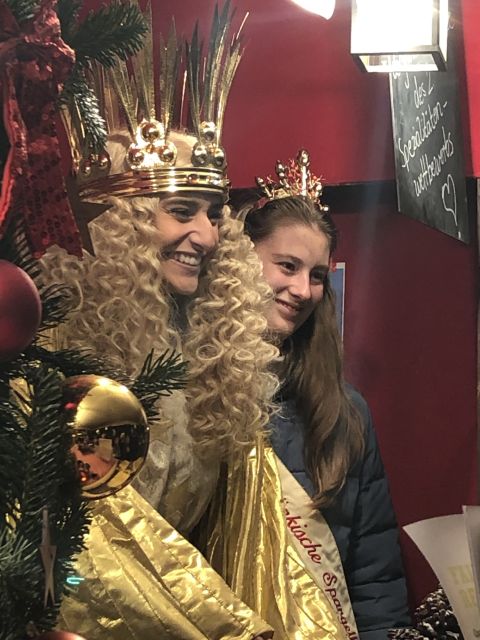
I would choose this experience for a first visit to Nuremberg during the Christmas season. The market can feel like a maze of lights, food stands, ornaments, crowds, and music. A guide gives the scene some order.
You are not simply stopping at one famous square. The route connects several parts of the city center and places the food in a cultural setting. You learn about German Christmas market customs, Nuremberg’s own traditions, and the history of the Christ Child tradition while eating and drinking along the way.
That mix is the main value. A short market stroll can show you the decorations. This tour explains why the market matters and gives you enough food to make the $57 price feel more reasonable than a simple sightseeing walk.
The food is not an optional extra. Culinary stops and drinks are part of the experience, and one past participant described the samples as full-size rather than tiny tastes. That matters in a city where buying several snacks and drinks separately can add up quickly.
More Christmas Tours in Germany:
- Cologne: Rhine River Winter Cruise with Festive Music
★ 4.3 · 676 reviews - Dresden: Advent Tour with Stollen Tasting and Mulled Wine
★ 4.4 · 140 reviews - Christmas Markets Food Tour in Munich
★ 4.5 · 110 reviews
Starting at the Fleisch Bridge
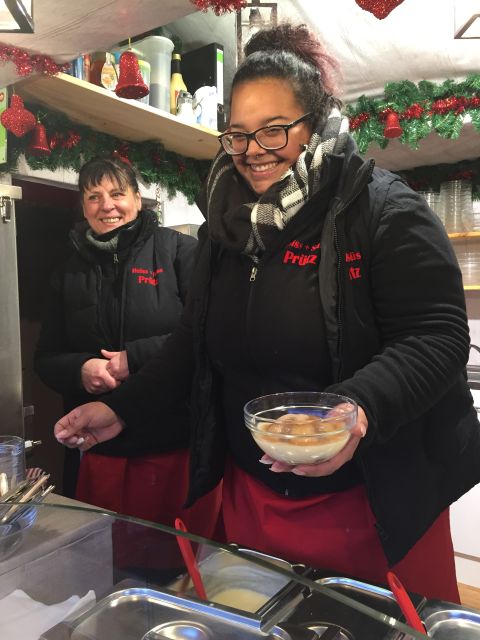
The tour begins at one of two possible locations, with the Fleisch Bridge and the Starbucks nearby used as the stated starting point. The first guided portion at the bridge lasts about five minutes before the route moves toward the central market.
Take the meeting instructions seriously. The exact meeting point may change with the option you book, and one group had trouble because some people waited in front of Starbucks while the guide was on the bridge near it. In a crowded Christmas setting, that small difference matters.
I would arrive early and look for the guide on or beside the bridge rather than assuming the meeting point is the café entrance. Since the information does not promise a large company sign, it is sensible to check for the guide and confirm the tour name before setting off.
The bridge is a practical starting place because it puts you near the old center without beginning inside the busiest part of the market. Still, the walk soon enters the most crowded sections, so keep your group in sight.
Hauptmarkt: Nuremberg’s main Christmas stage
The first major stop is Hauptmarkt Nürnberg, the central square and the heart of the Christmas scene. You spend about 30 minutes here with a combination of guiding and food tasting.
This is where the tour can feel most exciting, but also least calm. The main market is busy, and the narrow paths between the stalls may make it difficult to hear every word. If you want a quiet, slow look at each display, you may find this section hectic.
The benefit is access to the best-known part of Nuremberg’s Christmas tradition. Your guide explains the market’s long past and the customs that have made it famous. You also begin tasting local seasonal food, rather than waiting until the end for a single snack.
Expect the guide to help you understand what you are seeing instead of simply pointing out attractive stalls. Nuremberg’s market includes both newer stands and historical stalls, and the tour draws attention to that contrast. The information provided for the experience refers to stalls with roots reaching back as far as the 3rd century, a detail that gives the market a sense of continuity across generations.
The food here is central to the experience. Sausage gives you a taste of one of the city’s best-known specialties, while Lebkugel offers a sweeter Christmas flavor. Hot wine adds warmth, though you should remember that the walk takes place outdoors.
Several guides have received especially strong praise for explaining the market clearly. Claudia was described as engaging while covering the market’s history and food. Martina is noted for explaining how traditions began and which customs continue today. These details suggest that the guiding is not limited to a memorized list of stall names.
Hans-Sachs-Platz and the children’s market
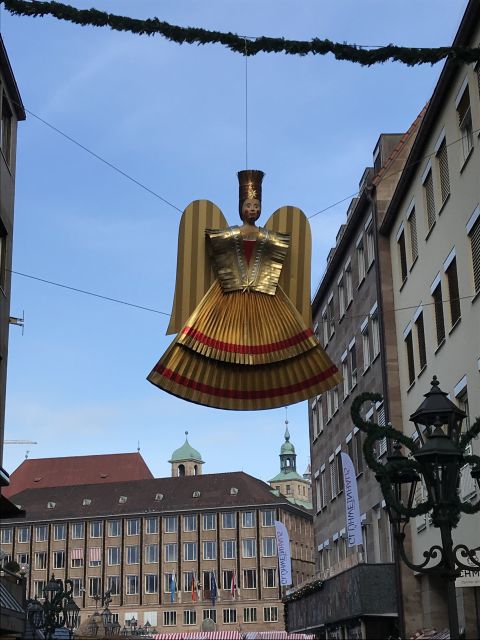
The route continues to Hans-Sachs-Platz, where you spend around 20 minutes with more guiding and tasting. This section is useful because it takes you beyond the main square and introduces a different side of Nuremberg’s Christmas program.
The tour then returns to Hauptmarkt for another guided food stop of about 25 minutes. That return may sound repetitive on paper, but it lets you see the central market in the context of the other areas rather than treating it as one large, confusing square.
The route also includes the Children’s Christmas Market, referred to locally in the tour information as the Christkindlesmarkt. The name can be confusing because visitors often use Christkindlesmarkt for Nuremberg’s main Christmas market. Your guide can help sort out the local terms and explain the role of the Christ Child tradition in Nuremberg’s celebrations.
This is one of the most valuable parts for families and for anyone interested in the meaning behind the decorations. You get more than a quick look at colorful stalls. You learn how the Christ Child became part of the city’s Christmas identity and how that tradition fits into the wider German market custom.
The route is not described as a formal children’s activity, so I would not book it expecting games or entertainment aimed at young children. The emphasis remains on walking, listening, eating, and learning. Families who enjoy food and stories should find it useful, but very young children may find two hours of market walking tiring.
Same season, another way to celebrate it:
- Original Munich Christmas Market Tour with Festive Wine and Food
★ 5.0 · 85 reviews - Freiburg: Christmas Drag Show Walk with Betty BBQ
★ 4.6 · 55 reviews - Private Christmas Tour in Münster including Glühwein
★ 4.9 · 54 reviews - Munich Christmas Market Food Tour with Tastings
★ 5.0 · 54 reviews
Food tastings: what you are really paying for
The $57 price makes most sense when you treat the tour as both a guided walk and a small meal. Included stops feature food and drinks, with examples such as sausage, Lebkugel, and hot wine. The samples have been described as generous, and one person suggested adding one more tasting, which tells you the portions can feel substantial but not endless.
I would not expect a full restaurant meal. Think of the food as several seasonal stops spread across two hours. You get enough to learn what you like and enough warmth and substance to make the walk more enjoyable.
The food also gives the guide a natural way to discuss local customs. You can ask what a dish is, how it is served, and whether it is something people associate with Christmas specifically or with German street food more generally. The tour promises culinary stops, but it does not provide a fixed menu in the information available, so the exact selection may vary.
That flexibility is normal at a seasonal market. Stalls can change, and some vendors may be easier to use than others on a busy day. One guide had to work through a payment issue with a vendor, a reminder that market logistics can be less polished than a restaurant visit.
If you are mainly interested in food, tell the guide early. One past participant wanted more culinary discussion, and that is a fair point. The tour gives strong attention to history and custom, so food-focused visitors should make their priorities clear rather than expecting a dedicated cooking class.
The international market adds a change of mood
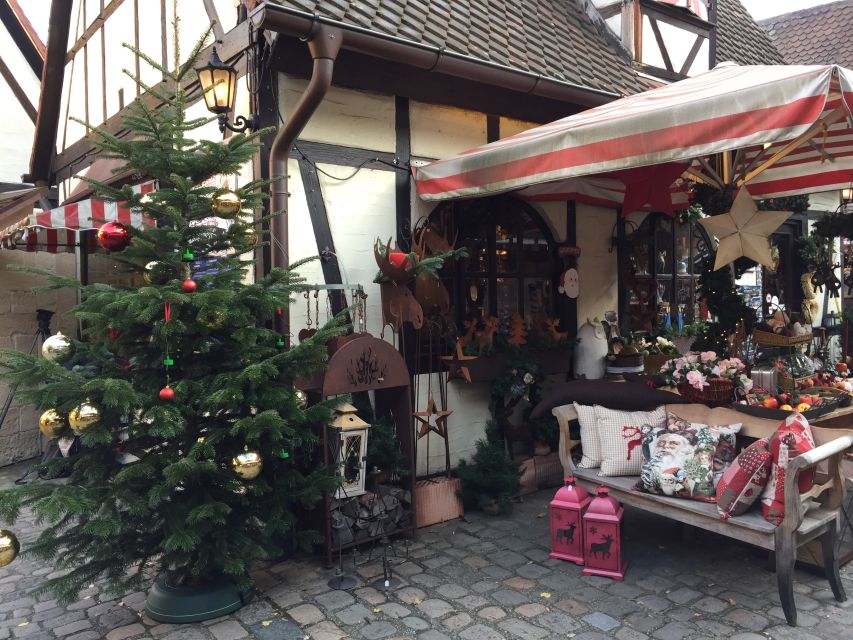
After the central areas, the route continues to the International Christmas Market. This stop broadens the experience beyond Nuremberg’s own traditions.
International market sections can be useful for comparison. You see how other places present Christmas food, decorations, and gift ideas alongside the local German style. The tour information does not promise a specific list of countries or tastings here, so I would treat this as a guided market area rather than expect a detailed world-food survey.
The change also helps break up the main square’s intensity. If Hauptmarkt feels crowded, the international section may give you a different rhythm, although the tour takes place during the Christmas season and no stop should be assumed to be quiet.
The guide’s role matters here. Without explanation, an international market can seem like another group of stalls. With context, you can compare the local Nuremberg tradition with the way partner regions and other cultures present the holiday season.
St. Sebald Church and the partner-city market
The final section takes you to the Market of the Partner Cities between St. Sebald Church and the Town Hall. You spend about 20 minutes around St. Sebaldus Church with more guiding and tasting before the experience ends nearby.
This is a good finish because it places the market within Nuremberg’s historic center rather than ending beside a single food stand. The church and Town Hall provide clear landmarks, and you finish close to two stated drop-off points: Hauptmarkt Nürnberg or Rathaus Nürnberg.
The partner-city market is another chance to see how Nuremberg presents connections beyond its own city limits. The tour information does not identify each partner city, so you should not book this expecting a detailed political or geographic lecture. You can expect an introduction to the stalls and their cultural role as part of the Christmas market program.
The ending is practical. You are still in the center, near places you may want to revisit for shopping, photographs, or another snack. It also makes the tour easy to pair with an afternoon or evening in the market, assuming you have planned enough time around the two-hour walk.
What the guides add to the experience
The strongest part of this tour is the human guide. English and German are offered, and the guiding accounts emphasize preparation, warmth, and clear explanations.
Claudia is associated with an engaging account of the market’s history, food, and warm drinks. Justina, also referred to as Justine in one account, is described as attentive and welcoming while sharing her affection for Nuremberg. Martina is repeatedly linked with explanations of how the market developed, why its customs matter, and which traditions continue.
Those names are useful when comparing dates, but guide assignments can change. Do not book solely because you hope for one particular person. The broader pattern is what matters: the experience depends heavily on a guide who can manage a moving group, explain the traditions, and keep food stops running smoothly.
A strong guide also helps with practical choices. One person returned to the market the next day and felt better prepared to find the good things to buy. That is a real benefit. The market is easier to enjoy once you know its layout and have already sampled a few specialties.
Timing, clothing, and accessibility
The tour lasts two hours, which is long enough to cover several market areas without taking over your day. It is short enough to fit around a larger Nuremberg sightseeing plan.
Wear comfortable shoes. You will walk between Fleisch Bridge, the central market, Hans-Sachs-Platz, the international market, and the area around St. Sebald Church. Warm clothing is essential, and the tour runs in rain or shine.
Large bags and luggage are not allowed. That makes sense in crowded market lanes, but it means you should leave suitcases elsewhere before meeting the guide. The experience is wheelchair accessible, though crowded paths and market traffic may affect how easily the group moves.
English and German tours are available. Check the starting time when booking because the information does not give one fixed departure hour.
Free cancellation is available up to 24 hours before the tour for a full refund, and you can reserve now and pay later. Those terms are helpful in winter, when weather and changing holiday plans can affect a city break.
Who should book this Nuremberg market tour
I would recommend it to first-time visitors who want a guided introduction rather than a free-form shopping stroll. It also suits anyone who likes to connect food with local history and traditions.
Families may appreciate the children’s market and the manageable two-hour length. Couples and solo visitors can use the route to get oriented before returning on their own. Food-focused visitors should enjoy the included samples, but they should remember that the tour gives equal weight to history and culture.
I would be more cautious if you dislike crowds or need a very quiet walking tour. Hauptmarkt can be hard to cross, and one participant specifically found the central area too busy for easy movement. You may also prefer another option if you want a long list of tastings or detailed food talk at every stop.
The tour is not the best fit for someone carrying luggage, seeking private attention, or expecting a full sit-down meal. It is a moving outdoor experience with several samples, not a restaurant crawl.
Should you book the Christmas City Culinary Tour?
Book it if you want a guided introduction to Nuremberg’s Christmas markets, three or more kinds of seasonal food and drink, and a clear explanation of the city’s Christmas customs. The $57 cost is fair when the samples are generous and you value the guide’s stories and route planning.
Skip it if your main goal is browsing quietly, eating at your own pace, or avoiding the most crowded market lanes. In that case, visit the markets independently and spend the same money on your own choices.
For most first visits, I think the tour earns its place early in your Nuremberg stay. You can learn the layout, taste the signature foods, and return later with better judgment about what to buy. Arrive early at the bridge, dress for winter, keep your bag small, and tell the guide if food is your main interest.
FAQ
How long does the Nuremberg Christmas City Culinary Tour last?
The tour lasts two hours.
What food and drinks are included?
Included tastings can feature sausage, Lebkugel, hot wine, and other seasonal culinary specialties. The exact selection is not fixed in the available tour information.
Which Christmas markets does the tour visit?
The route includes the main market at Hauptmarkt, the Children’s Christmas Market, the International Christmas Market, and the Market of the Partner Cities near St. Sebald Church and the Town Hall.
Is the tour available in English?
Yes. Live guiding is offered in English and German.
Where does the tour begin and end?
There are two possible starting location options, including the Fleisch Bridge and the Starbucks nearby. The stated drop-off options are Hauptmarkt Nürnberg and Rathaus Nürnberg. The exact meeting point may depend on the option booked.
What should I bring, and what is not allowed?
Bring comfortable shoes and warm clothing. Luggage and large bags are not allowed. The tour takes place rain or shine.
New this season in Germany
- Christmas mulled wine tour in Münster★ 5.0 · 3 reviews
- Munich Christmas Market Tour★ 4.0 · 9 reviews
- Munich Christmas Market Small Group Tour with Gingerbread Heart★ 4.0 · 9 reviews
- Munich Christmas Markets Private Walking Tour★ 5.0 · 2 reviews
- Private tour of Munich’s most beautiful Christmas markets★ 4.5 · 2 reviews
- Munich Christmas Market Hopping Guided Tour★ 5.0 · 2 reviews
- Heidelberg Christmas Market Tour With A Professional Guide★ 4.0 · 5 reviews
- Kling, mulled wine, klingelingeling – the Christmas city tour with Betty BBQ★ 4.0 · 9 reviews
Germany Christmas Tours, side by side.

Cologne: Rhine River Winter Cruise with Festive Music
Read our review →
Dresden: Advent Tour with Stollen Tasting and Mulled Wine
Read our review →
Original Munich Christmas Market Tour with Festive Wine and Food
Read our review →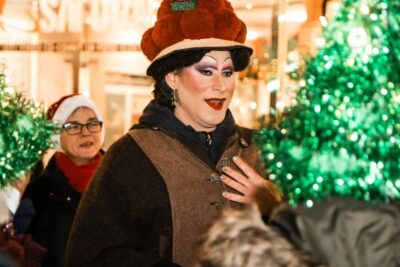
Freiburg: Christmas Drag Show Walk with Betty BBQ
Read our review →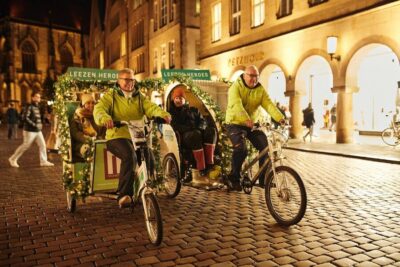
Private Christmas Tour in Münster including Glühwein
Read our review →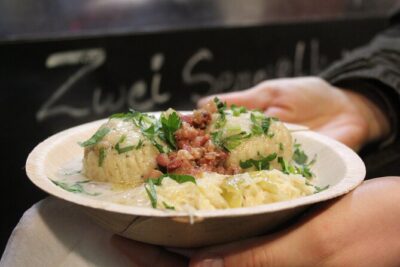
Munich Christmas Market Food Tour with Tastings
Read our review →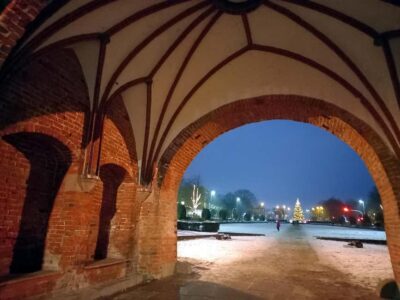
This tour also sits in