Review · STRASBOURG
Strasbourg Christmas market tour and culinary city tour with tastings
Strasbourg’s Christmas market is not just a place for pretty lights and hot wine. It is a chance to taste the season itself, from buttery Bredele cookies and gingerbread to pretzel gratiné, tarte flambée-inspired baguette, and warm Alsatian drinks. Céline, a Strasbourg native with nearly two decades in the food industry, leads you through five or six carefully chosen stops.
I especially like the small group of up to six people, which gives this three-hour walk a personal feel in streets that can become very crowded. I also like the mix of sweet, savory, and drinks, plus guaranteed seating after walking in the cold. The main drawback is the narrow diet range: this tour is not suitable for vegans, people with gluten or nut allergies, people with diabetes, or anyone needing a fully allergy-safe menu.
Key points at a glance
- A Strasbourg native as your guide: Céline has lived in the city for more than 20 years and brings a food industry background, baking knowledge, and local Christmas traditions to the walk.
- Five or six food stops: Expect a changing mix of Alsatian Christmas sweets, savory market food, and soft or alcoholic drinks.
- A very small group: The tour is limited to six participants, useful in crowded market lanes and better for questions.
- More than a food crawl: You’ll also receive tips on seasonal activities, sights, local gifts, decorations, and Christmas customs across the region.
- A warm place to sit: Seating is included, a welcome detail after time outside in winter weather.
- A real dietary limitation: This is not a good match for vegans or people with gluten, nut, or other food allergies.
Why Strasbourg’s Christmas market rewards a food tour
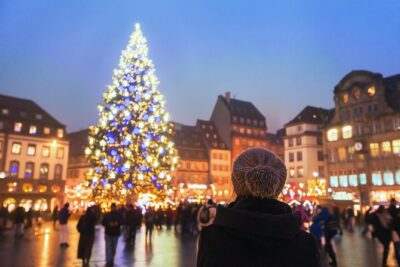
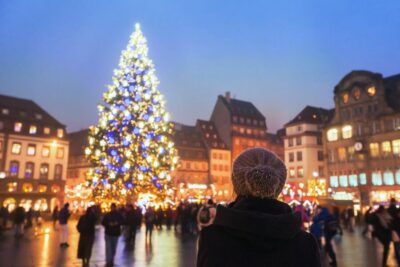
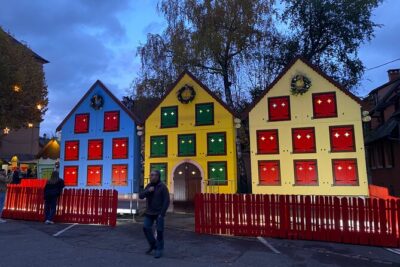
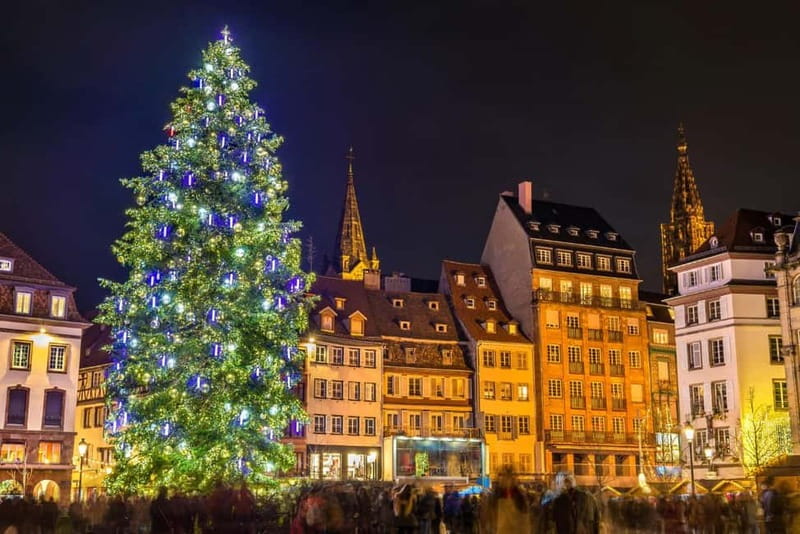
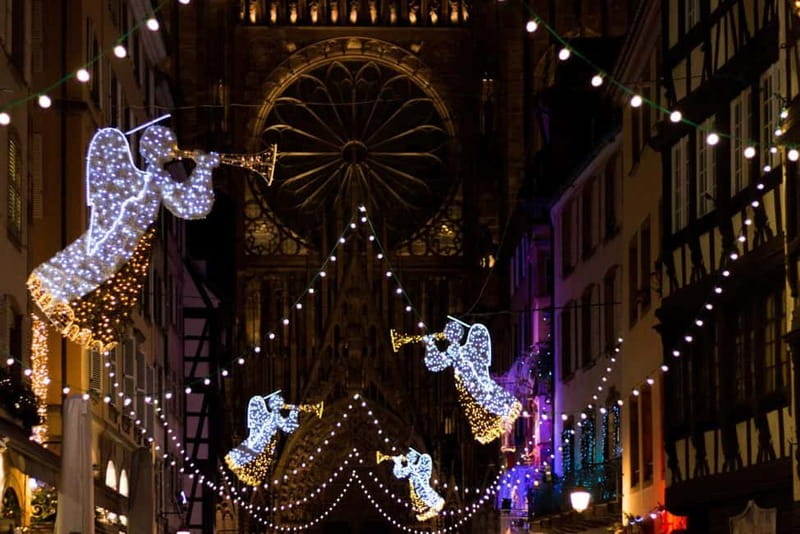
The Strasbourg Christmas market, known locally as the Christkindelsmärik, is one of Europe’s oldest and France’s oldest. During Advent, the city center fills with decorated huts, glowing facades, seasonal displays, and the large Christmas tree on Place Kléber.
That spectacle is easy to enjoy on your own. The hard part is deciding what is worth buying and what is simply a pretty stall in a busy lane. A local food guide can save you from spending your limited market time on random snacks.
Céline’s food background matters here. She has worked in food marketing and communication, has written about food, bakes, and sometimes caters. That combination suggests a tour focused not only on eating, but also on explaining what sits behind the food: local names, holiday customs, ingredients, and the difference between an Alsatian specialty and a generic Christmas-market snack.
I like that the tour does not promise one huge meal. Instead, you receive five or six smaller tastings across different kinds of places. That lets you sample more of the region without committing to a single restaurant menu. It also leaves room for you to buy a larger meal later if you still have an appetite.
More Christmas Market Tours in France
- Christmas Market Tour from Colmar
★ 4.5 · 64 reviews - Alsace Christmas Markets Day Tour from Strasbourg
★ 4.5 · 48 reviews - Strasbourg: Christmas Markets Walking Tour with Mulled Wine
★ 4.8 · 36 reviews
Starting at Place 5 and meeting Céline
The meeting point is 5th Place, also identified as Boutique Culture, in central Strasbourg. The walk lasts three hours and stays on foot, so wear shoes that can handle stone streets, damp pavement, and a long outing in winter weather.
The group limit of six is one of the tour’s strongest practical features. Strasbourg’s market can become crowded, especially around the main squares and popular stalls. A small group is easier to keep together, and you should have more time to ask Céline about an unfamiliar pastry or local custom.
Céline guides in German, French, and English. That is useful in Alsace, where the region’s French and German influences appear in food names and holiday traditions. Some material may be presented in its original language, so you may encounter local terms rather than simplified translations.
This is not a formal walking tour of Strasbourg’s architecture or cultural history. You will see the city’s Christmas displays while moving between tastings, and Céline will offer seasonal sightseeing advice, but the center of the experience is food. If your main goal is cathedral history, museum visits, or a detailed introduction to Strasbourg’s past, book a separate city tour.
The first tastes: Bredele, Männele, and Christmas baking
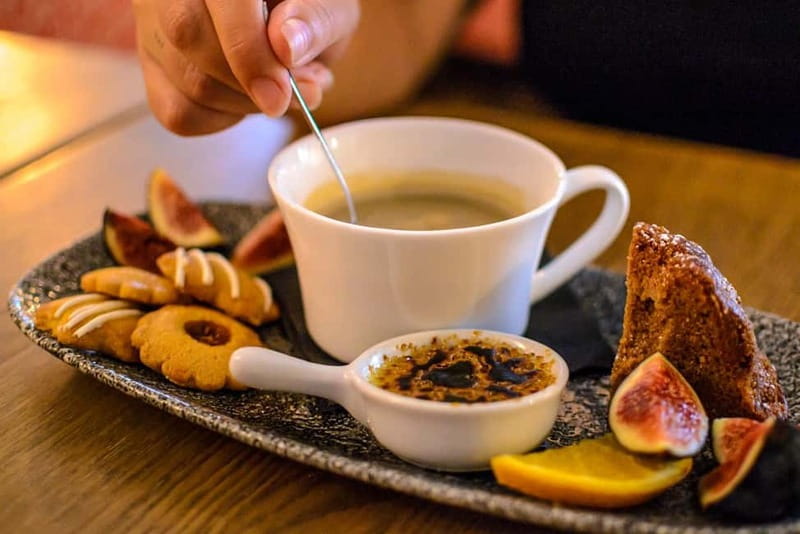
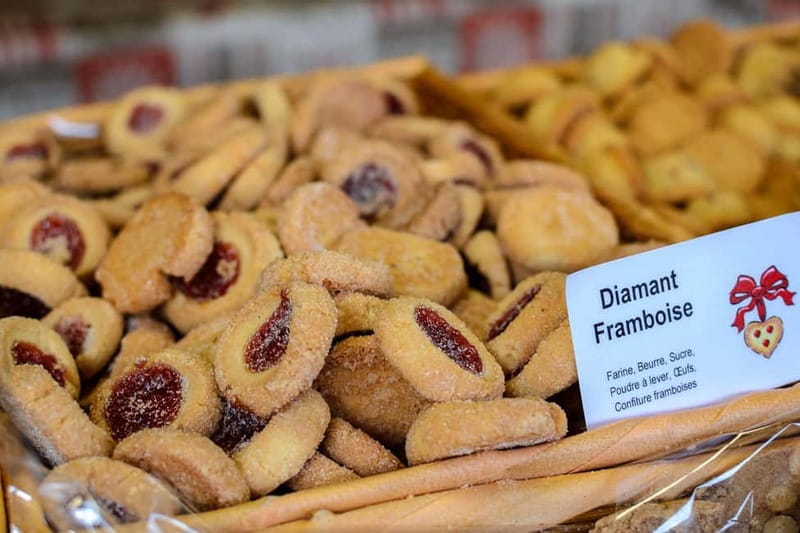
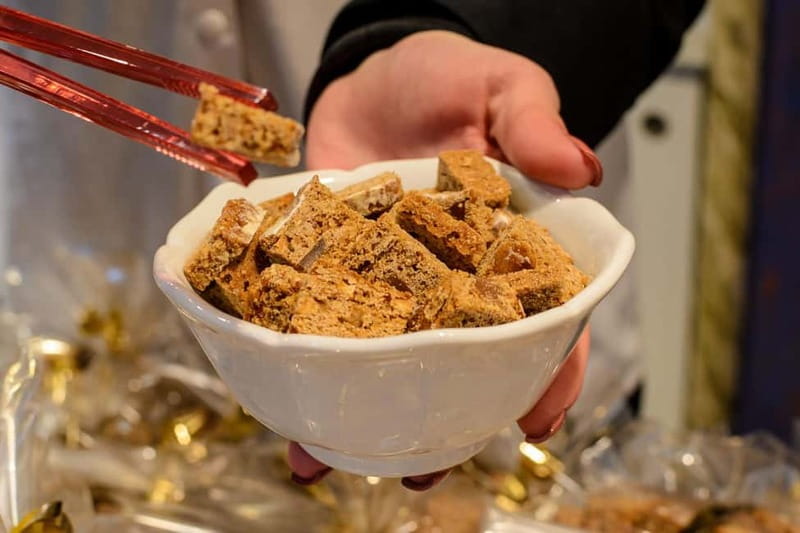
Alsace takes Christmas cookies seriously. Bredele come in many varieties, often shaped and flavored with ingredients such as citrus, dried fruit, cinnamon, star anise, ginger, and other warm spices.
A tasting of these cookies is valuable because one sample cannot represent the full range. Some are crisp and buttery, while others may be more strongly spiced or filled with dried fruit. Céline’s baking background should help you understand why these small cookies are such a familiar part of Alsatian Advent.
You may also try a Männele, a small figure-shaped pastry made from yeast dough. It is the Alsatian version of a winter bread figure known in parts of Germany as a Weckmann. This is the kind of item that can look simple in a bakery window but carries a clear seasonal place in local food culture.
Other Christmas specialties connected with the tour include gingerbread, Hützelbrot, Baerewecke, and Christstollen. These are not all guaranteed at every stop, since the exact five or six locations can vary, but they show the range of treats Céline may introduce.
I appreciate the chance to taste these foods with context. You can buy a packet of cookies anywhere in the market, but knowing the names and traditions makes it easier to choose gifts or bakery items later. The tour also gives you ideas for edible souvenirs that travel better than fragile decorations.
Savory stops for a proper winter appetite
A useful Christmas market tour needs more than sugar. This one includes savory specialties, which helps turn the tastings into a light meal rather than a parade of desserts.
One likely style of snack is baguette flambée, a baguette topped with ingredients associated with tarte flambée. It offers a familiar French bread base with the flavors of one of Alsace’s best-known regional dishes.
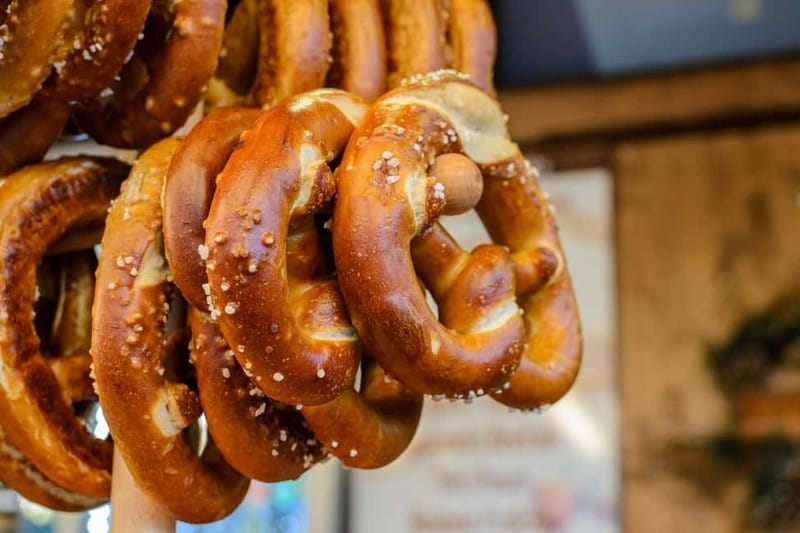
Pretzel gratiné is another practical market bite. The pretzel is baked with cheese, making it salty, warm, and filling. It is exactly the sort of food that tastes best after time outside in cold air.
You may also encounter raclette or Munstiflette. Munstiflette combines spätzle or potatoes with melted Munster cheese, so it is heavier and more regional than a quick pastry. Munster is a soft Alsatian cheese with a strong character. If you enjoy assertive cheese, this could be one of the most memorable tastings. If you prefer mild food, ask Céline what is coming before you accept a full portion.
Other regional foods named for the tour include a gourmet sandwich with foie gras, steaming choucroute, and grumbeerekiechle, or Alsatian potato pancakes. These foods cover several sides of local cooking: rich festive ingredients, fermented cabbage, potatoes, cheese, and bread.
The exact order and availability of dishes can change. Market vendors may sell out, restaurants may be full, and Christmas stalls do not all operate in the same way each day. The useful promise here is variety, not a fixed restaurant menu.
More Festive Tastings in France
- Immersive Christmas cellar visit and Alsace wine tasting
★ 5.0 · 20 reviews - Paris Christmas Lights & Stories with Tastings on Champs-Élysées
★ 5.0 · 15 reviews - Paris: Christmas Market Guided at Notre Dame & Food Tasting
★ 5.0 · 3 reviews - Alsatian Christmas Immersive Wine Tour with Wine Tasting
★ 5.0 · 3 reviews
Warm drinks and a seat out of the cold
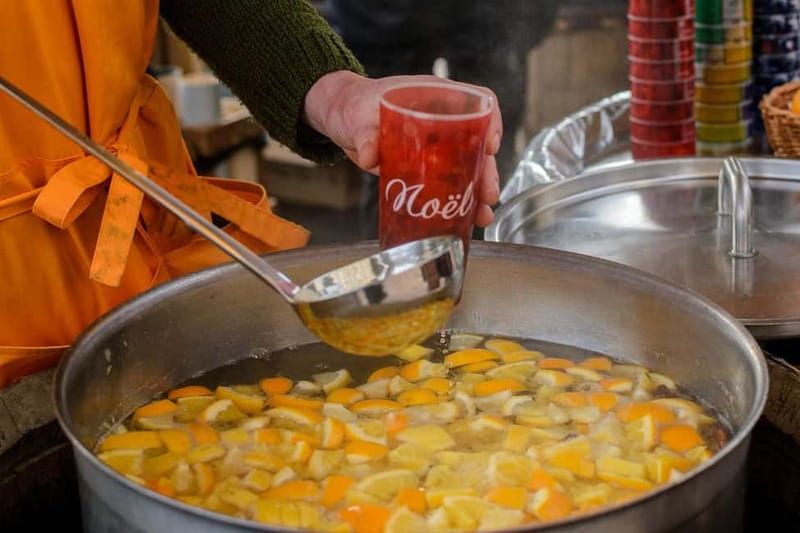
Drinks are part of the tasting count, with soft and alcoholic options available. You might receive mulled wine, warm apple juice, or a Christmas beer. Mulled wine may be red or white, giving you another small look at Alsatian preferences rather than assuming every market serves the same red version.
Warm apple juice is a good choice if you do not drink alcohol. A Christmas beer gives you a different seasonal option, while mulled wine fits the classic market mood. Tell Céline your preference early, especially if you want to avoid alcohol.
The included seating is easy to overlook when planning a Christmas market day, but it may be one of the tour’s best details. Strasbourg’s market streets can be packed, and standing outside with food in your hands gets tiring. A guaranteed place to sit means you can slow down, eat properly, and warm up instead of rushing through every bite.
Bring water if you need it. The tour includes food and drinks, but other food and beverages are not included, and you remain responsible for personal purchases.
Market stalls, gifts, and local products
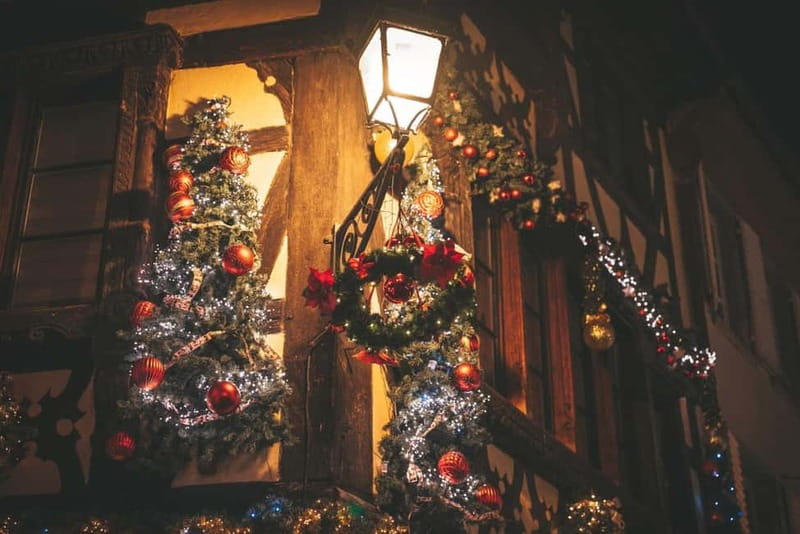
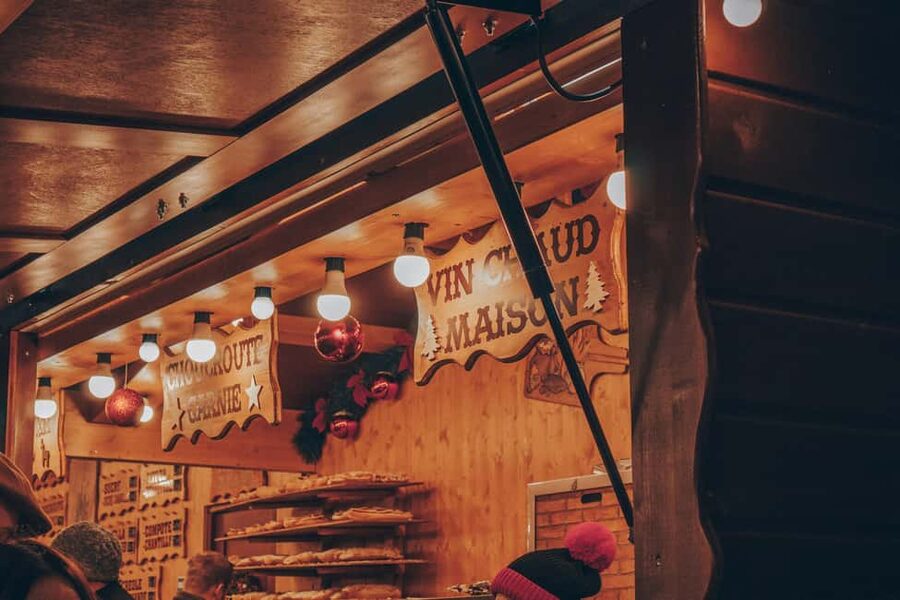
The walk is designed around selected stores, makers, and huts rather than an attempt to cover every Christmas stall. That matters because Strasbourg’s market can feel overwhelming on a first visit. You will not need to inspect every booth to find something worthwhile.
Céline can point you toward gourmet gifts, Christmas decorations, handmade goods, local sustainable products, and souvenirs. You should think of the tour as an introduction to what to look for, not a shopping package. Personal purchases are extra, so save room in your budget if you want to bring home cookies, spices, decorations, or other gifts.
This part may be especially useful if you have only one free afternoon in Strasbourg. Instead of wandering without a plan, you can learn which types of products fit local traditions and then return to the market stalls that interest you most.
The tradeoff is that you will not have unlimited shopping time during the three-hour walk. Tastings, explanations, and movement between stops take priority. If your main goal is buying gifts, use the guide’s advice during the tour, then return to the market on your own afterward.
What the three-hour pace feels like
Three hours is long enough for a proper introduction but short enough to fit into an Advent day with other plans. The pace combines walking, stopping to taste, listening, and sitting. You should not treat it as a quick snack break between cathedral visits.
The streets may be crowded, queues may form, and restaurants can be fully booked during the season. Those conditions are part of visiting Strasbourg in December, not a flaw unique to this tour. They do mean you should allow extra time around the activity and avoid scheduling an important train or timed entry immediately afterward.
Bad weather can lead to postponement or cancellation. Bring warm clothing, gloves, warm shoes, comfortable clothes, and an umbrella. The tour is outside for much of its route, even though seating is available during the food experience.
Because the group has at least two adults, solo bookings may require another adult participant for the tour to run. Check availability and the starting time for your chosen date.
Is $123 a fair price?
At $123 per person, this is not the cheapest way to wander through the Christmas market. You could buy individual snacks and drinks for less if you are comfortable choosing stalls yourself.
The price becomes easier to justify if you value five or six tastings, a small group, a local guide, seating, and practical advice in English, French, or German. You are paying for selection and explanation as much as for the food itself. The guide’s background in food, baking, and Strasbourg life adds a layer you would not get from simply buying a pretzel and walking on.
The value is strongest for first-time visitors, food-focused visitors, and anyone who wants help sorting local specialties from standard market fare. It is weaker for people who already know Alsatian food, dislike guided activities, or plan to eat only one or two simple snacks.
Remember that extra food, drinks, souvenirs, museum tickets, attractions, and transportation are not included. The tour also does not include a full historical or cultural tour of the city.
Who should book this tour?
I would recommend it to you if you:
- Want a guided introduction to Strasbourg’s Christmas market
- Enjoy trying several small portions instead of ordering one large meal
- Like pastries, cheese, bread, potatoes, seasonal drinks, and traditional holiday foods
- Want a very small group rather than a large bus-style outing
- Need ideas for edible gifts and local souvenirs
- Prefer guidance in English, French, or German
- Appreciate a place to sit and warm up during a winter walk
I would be cautious if you have serious food restrictions. The experience is specifically marked as unsuitable for vegans, people with diabetes, people with food allergies, people with gluten intolerance, and people with nut allergies. Dietary restrictions should be shared in advance, but the stated limitations mean this is not an appropriate choice for many restricted diets.
It is also not suitable for wheelchair users, babies under one year, pets, oversize luggage, or baby strollers. These limits matter in a crowded market with walking between stops.
Final call: a strong food-first introduction to Strasbourg
Book this tour if you want your Strasbourg Christmas market visit to center on local food, seasonal customs, and smart choices about what to taste. Céline’s connection to the city and food trade, the group size of six, and the mix of sweets, savory dishes, and drinks give the outing a clear purpose.
Skip it if you mainly want independent shopping, a formal history walk, or a fully flexible meal. At $123, the tour makes sense when you use the guidance and variety. For a first Advent visit, it can help you get oriented quickly, eat more thoughtfully, and leave with a better sense of what makes an Alsatian Christmas table different from a generic European market.
FAQ
How long does the Strasbourg Christmas market food tour last?
The tour lasts three hours and takes place as a walking tour through central Strasbourg.
Where does the tour meet?
The meeting point is 5th Place, identified as Boutique Culture.
How many people are in the group?
The group is limited to six participants. At least two adults are required for the experience to take place.
Which languages does Céline speak?
The live tour is available in German, French, and English. Some content may be shown in its original language.
What food and drinks are included?
You receive five or six varied tastings, including Alsatian Christmas specialties, sweet and savory foods, and soft or alcoholic drinks. Possible examples include Bredele, Männele, pretzel gratiné, baguette flambée-style snacks, mulled wine, warm apple juice, and Christmas beer.
Can dietary restrictions be accommodated?
You should report dietary restrictions in advance, but the tour is not suitable for vegans, people with diabetes, people with food allergies, people with gluten intolerance, or people with nut allergies.
What should you bring, and can the tour be canceled for weather?
Bring comfortable shoes, warm clothing, gloves, warm shoes, and an umbrella. In bad weather, the experience may be postponed or canceled. You can cancel up to 24 hours in advance for a full refund.
New this season in France
- Unusual track game on Christmas markets in Orleans★ 4.0 · 3 reviews
- Discover Colmar’s Christmas Market Magic with a Local★ 3.5 · 4 reviews
- Experience the magic of Christmas in Riquewihr and Eguisheim!★ 5.0 · 3 reviews
- Christmas illuminations in 2CV – With 2 Presents (Food + goodies)★ 5.0 · 2 reviews
- Paris: Experience the magic of Christmas on a walk with a pro photographer★ 5.0 · 6 reviews
- Paris VIP: Xmas Sightseeing Chauffeur Driven Tour 3hr★ 5.0 · 4 reviews
- Paris: Private Christmas Photoshoot with Props★ 5.0 · 4 reviews
- Paris : Christmas Special Lunch Cruise on the Seine River★ 4.7 · 7 reviews
Strasbourg Christmas Tours, side by side.
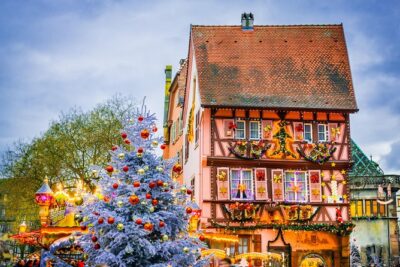
Alsace Christmas Markets Day Tour from Strasbourg
Read our review →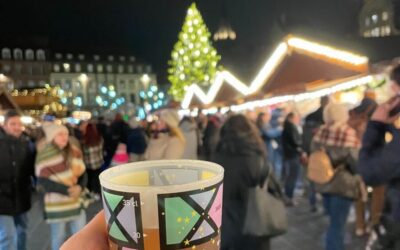
Strasbourg: Christmas Markets Walking Tour with Mulled Wine
Read our review →
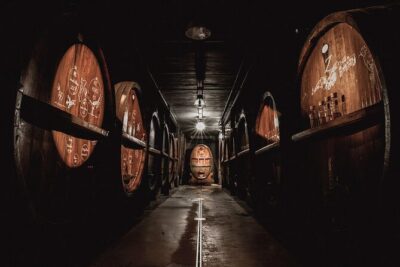
Immersive Christmas cellar visit and Alsace wine tasting
Read our review →