
Review · VIENNA
Wien: Tour with locals on the trails of the Christmas Tree
Vienna’s Christmas tree tradition is the unusual star of this two-hour city walk. Starting at the Anker Clock, you follow the story through the old center, with palaces, grand façades, Albertina, Rathausplatz, and Advent markets providing the setting. It is less a standard sightseeing circuit than a seasonal history lesson with a clear theme.
I like the way guide Nicole connects the tree to 19th-century Viennese society, rather than treating it as a decorative custom. I also like the small-group format, limited to 10 people, and the option to finish with punch at an Advent market. The main consideration is that the Christmas tree thread can get lost when the tour moves into detailed Vienna history, especially if your guide’s English is not a strong match for you.
Key points at a glance
- The story begins at the Anker Clock: Meet between the clock and the Marriage Fountain in the historic center.
- Vienna’s first Christmas tree is part of the route: The walk visits places linked to the tradition’s arrival in the city.
- Nicole adds social context: You hear how Viennese society reacted to the tree and how Catholic church circles viewed the custom.
- The route includes Albertina and Rathausplatz: These are short guided stops within a broader walk through central Vienna.
- You can end at an Advent market: Choose Am Hof or Rathausplatz, with punch available during Advent.
- The group stays small: A maximum of 10 participants makes questions and personal requests more practical.
Why Vienna’s Christmas tree story makes a good walking tour
A Christmas tree may seem like a narrow subject, but in Vienna it opens a door onto changing customs, social life, religion, and the city’s imperial setting. The tour explains how the tradition reached Vienna and how local people gradually became taken with it.
The strongest part is the link between a familiar object and a less familiar period of city life. Instead of simply pointing out decorated trees, Nicole places the tradition in the 19th century, when Viennese society was changing and public customs carried real social meaning.
You also hear about the tension between the Christmas tree and Catholic church traditions. This gives the walk a useful edge. The tree was not presented as an obvious or universally accepted part of Christmas from the beginning. Its arrival raised questions about culture, custom, and religious practice.
Churches are not normally part of the tour. If you specifically want to hear about St. Peter’s Church, the guide can include it because it lies along the route. That detail matters if you want to keep the tour focused on Christmas trees rather than turn it into a general church tour.
More Christmas Tours in Vienna:
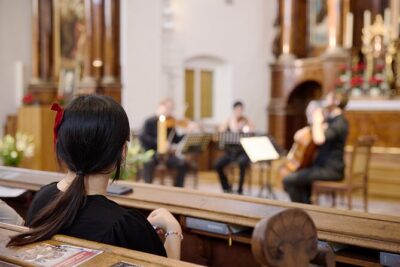
- Vienna: Christmas & New Year’s Concert in St. Peter’s Church
★ 4.6 · 763 reviews - Vienna: Christmas Photoshoot with a Pro Photographer
★ 4.3 · 241 reviews - Christmas and New Year Concert at St. Peter’s Church in Vienna
★ 4.5 · 155 reviews
Meeting at the Anker Clock
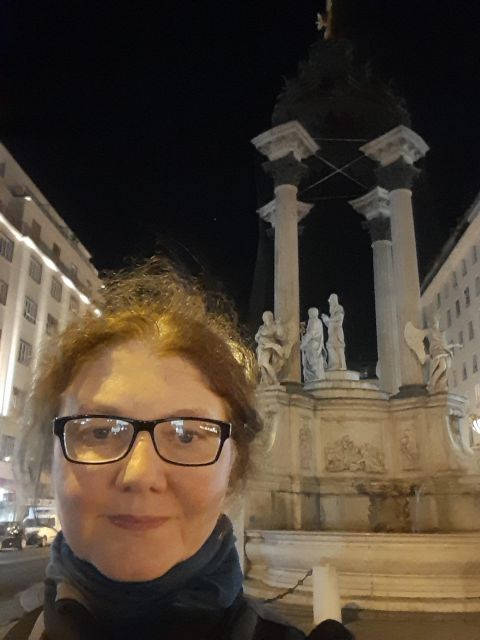
The meeting point is between the Anker Clock and the Marriage Fountain. Both are in central Vienna, so give yourself time to find the exact spot rather than arriving at the last minute.
The Anker Clock is a fitting starting point. It places you in the old city, where the walk can move naturally through Vienna’s historic core. From here, the tour heads into a sequence of streets, squares, and grand buildings tied to the Christmas tree story.
Expect about 90 minutes of guided walking through the historic center before the shorter stops at Albertina and Rathausplatz. You will want comfortable shoes and warm clothing. The tour runs rain, snow, or shine, and Vienna in December can be cold even when the evening lights look inviting.
Walking through Vienna’s historic center
The main section lasts roughly an hour and a half. The exact path is built around places connected with the Christmas tree tradition, so you get a sense of the city as a stage for the story rather than a list of unrelated monuments.
Nicole uses historical pictures showing the people and places involved. That can help bridge the gap between present-day Vienna and the city of the 19th century. You are not only looking at a palace façade or an old street. You are also considering how people living there encountered a new holiday custom.
This is where the tour earns its price. A standard central Vienna walk may show you famous buildings, but this one gives you a specific question to carry from stop to stop: how did the Christmas tree become part of Viennese life?
The tradeoff is pace. Detailed background on Vienna can be interesting, but it may not always feel tightly connected to the tree itself. One participant found it difficult to link the wider historical discussion with the main Christmas theme. If you prefer a fast, tightly scripted sightseeing tour, you may find parts of this section too broad.
On the other hand, if you enjoy social history and local stories, the added context is a strength. The tour can also be adjusted to individual interests. A German-speaking participant who joined with her son found that Nicole responded to personal requests and offered suggestions for the rest of a Vienna stay.
Albertina Museum and the palace-to-palace route
The Albertina Museum receives about 15 minutes of guided attention. This is not a full museum visit, and you should not expect time to explore its galleries. Instead, the stop helps place the Christmas tree story within Vienna’s grand architectural center.
The route is described as moving from palace to palace through an illuminated city. That setting is part of the appeal. You get the benefit of Vienna’s evening atmosphere without spending the whole tour inside a museum or church.
For first-time visitors, the Albertina stop also helps you connect several central sights in one walk. You may not leave knowing every detail of the museum itself, but you will have a better sense of where it fits in the city center and how the surrounding buildings relate to Vienna’s public life.
Same season, another way to celebrate it:
- Vienna: Christmas Markets Tour
★ 4.3 · 99 reviews - Christmas Concerts in Capuchin Church
★ 4.5 · 81 reviews - Christmas Market Vienna Tour
★ 4.0 · 53 reviews - Private Christmas Markets Walking Tour Vienna
★ 5.0 · 31 reviews
Rathausplatz and the Advent market finish
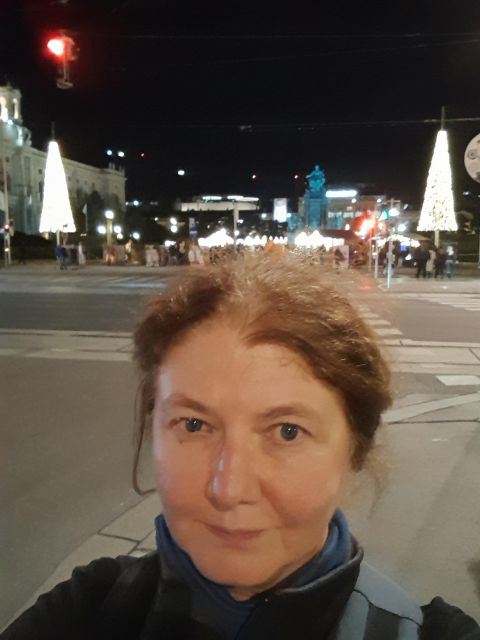
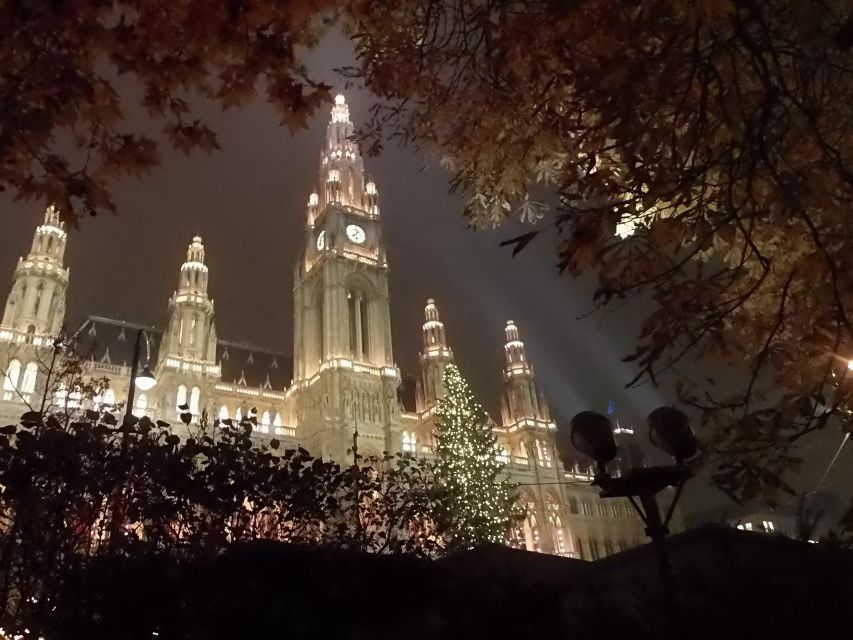
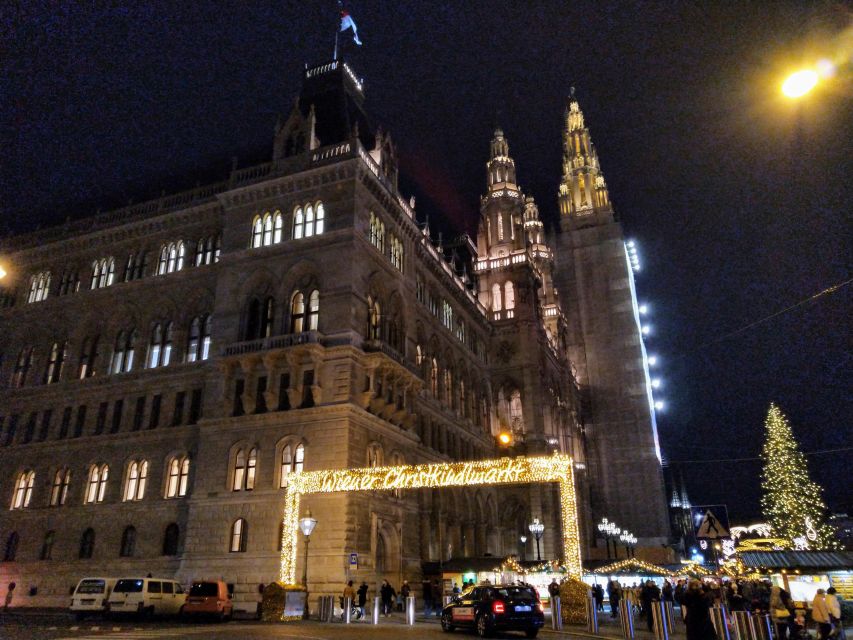
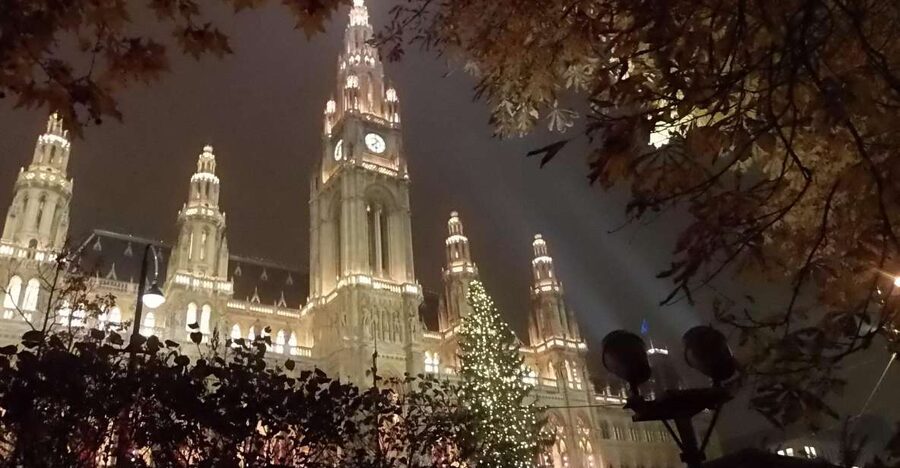
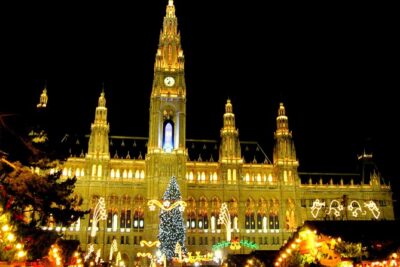
Rathausplatz is another short guided stop, listed at about 15 minutes. During Advent, the square gives the tour a natural seasonal finale, with Christmas trees, lights, stalls, and holiday products.
The exact ending can be chosen between Am Hof and Rathausplatz. That flexibility is useful because it lets you decide whether you want to finish near the market atmosphere of Rathausplatz or continue to Am Hof. The tour information also says you can have punch at one of Vienna’s Advent markets at the end.
Food and drinks are not included in the price, so treat the punch as an optional personal purchase rather than part of the tour package. Still, finishing with a warm drink can turn the final few minutes into a pleasant pause after walking in winter weather.
Keep your expectations realistic. The market visit is an ending point, not a guided shopping session. You will have time to look around and explore the products on your own, but the main value remains the guided story and the walk through the center.
What the guide adds to the experience
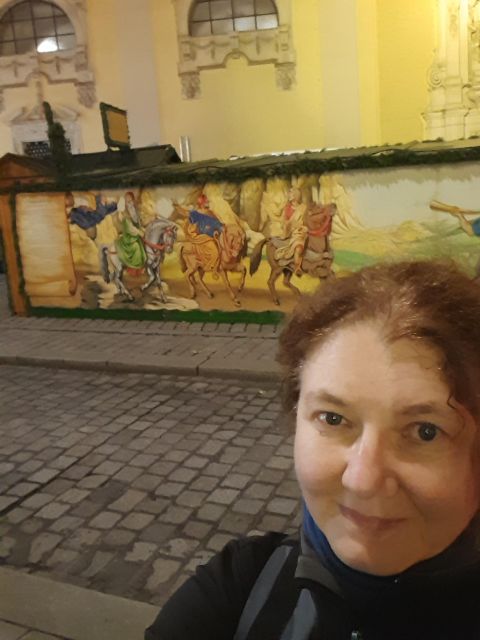
Nicole is the guide named for this experience, and her strongest quality is her ability to make a small subject feel connected to the city around it. She speaks English, German, and Italian, which gives you a choice of tour language when booking.
The most praised element is her personal command of the topic and her willingness to adapt the walk. One English-language participant found her English excellent and appreciated the way she explained both the Christmas tree and Viennese society. Another participant valued the practical advice for exploring Vienna over the following days.
There are two cautions. First, language ability can vary in practice, so an English-speaking group should make sure the tour language suits everyone. One American participant found the guide pleasant but had trouble following the English.
Second, the tour can be information-heavy. An Austrian participant who already knew Vienna still learned new historical details, but felt that the steady speaking pace became mentally tiring after a while. If you learn best with frequent pauses, ask questions when needed. The small group gives you a better chance to do that than a large coach tour.
Group size, access, and winter comfort
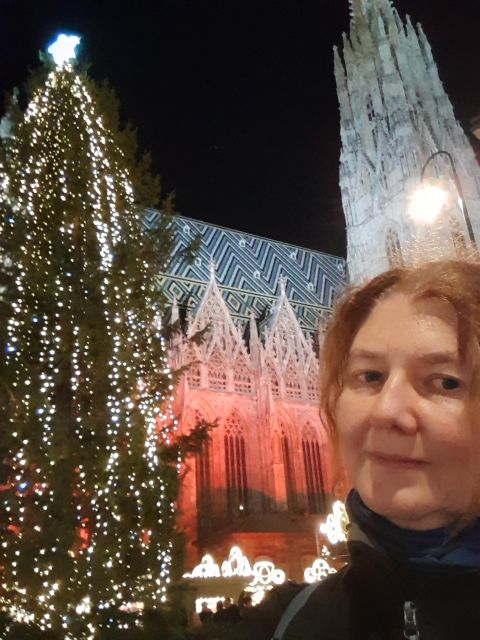
The group is limited to 10 people, or it may consist only of your own party. That is a meaningful advantage in the narrow streets of central Vienna. You can hear the guide more easily, ask about a particular building, and request a small adjustment when the route allows it.
The experience is listed as wheelchair accessible. Because the tour takes place outdoors and continues in rain or snow, you should still plan clothing and footwear carefully. The supplied information does not describe the exact street surfaces or restroom arrangements, so contact the provider if those details are important for your needs.
There is no hotel pickup or drop-off. You meet in the city center and finish there, which keeps the price focused on the walking tour rather than transport. Comfortable shoes, warm clothes, and a willingness to walk outdoors are essential.
Recording the guide’s explanations is prohibited because the tour content is protected by copyright. You can take personal notes if useful, but plan to listen rather than record.
Is $62 a fair price?
At $62 per person, this is not the cheapest way to see Vienna’s Christmas markets. You are paying for a small guided group, a specialist subject, historical images, and a route that combines storytelling with major central sights.
The value depends on your interests. If you want a broad introduction to Vienna’s main monuments, a conventional city tour may cover more famous sights in a more direct way. If you like local customs, social history, and seasonal atmosphere, this tour offers a more unusual angle.
The small group improves the value. A maximum of 10 participants makes the experience more personal, and the guide can respond to individual questions. The price also becomes easier to justify if you use the walk as an orientation for the rest of your stay and follow Nicole’s suggestions afterward.
Remember that drinks and food cost extra. If you plan to buy punch or market treats, add that to your evening budget.
Who should book this Christmas tree walk?
I would choose this for a visitor spending time in Vienna during Advent who has already seen the basic palace and museum highlights, or who wants a story-driven introduction to them. It suits people who enjoy learning how ordinary customs developed and who do not mind a guide spending time on social background.
It is also a good fit for families with older children who can manage two hours of walking and enjoy an unusual holiday story. The smaller group can make it easier to ask questions than on a large sightseeing excursion.
I would hesitate if you want a nonstop Christmas market crawl, a tour conducted mainly inside warm buildings, or a tightly timed list of major attractions. The Christmas tree subject is specific, and the historical explanation sometimes expands beyond it.
The tour runs in all weather, so winter conditions should shape your decision. For a dry, mild evening, the illuminated center and market finish may feel especially pleasant. In snow or heavy rain, the same route will demand more stamina.
Should you book it?
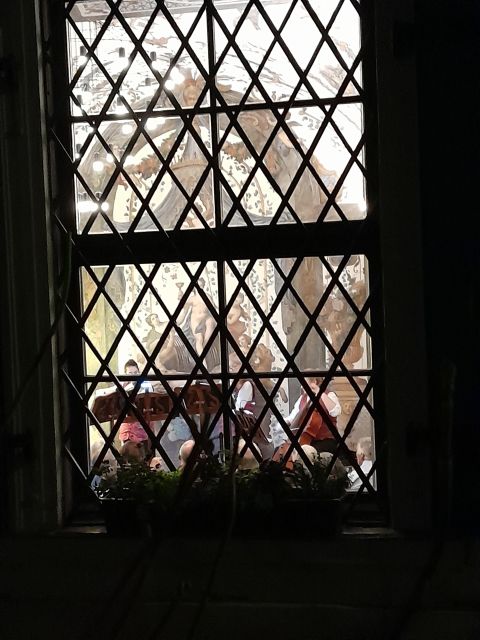
Book this tour if the idea of tracing how the Christmas tree reached Vienna sounds more interesting than simply photographing decorated squares. Nicole’s historical approach, small groups, visual material, and flexible ending give the walk a personal feel.
Skip it if you want only market stalls or a quick introduction to Vienna’s headline sights. For the right audience, $62 buys a thoughtful seasonal walk with useful city context. For everyone else, the narrow theme and information-heavy delivery may feel like more history than holiday cheer.
FAQ
How long does the Christmas tree tour last?
The tour lasts two hours. About 1.5 hours are assigned to the guided walk through Vienna’s historic center, followed by approximately 15 minutes at Albertina Museum Vienna and 15 minutes at Rathausplatz.
Where does the tour begin?
Meet between the Anker Clock and the Marriage Fountain in central Vienna.
Where does the tour finish?
You can choose to finish at Am Hof or Rathausplatz. The listed address for Am Hof is Am Hof 1598/1, 1010 Vienna, Austria.
Which languages are available?
The tour is offered in English, Italian, and German.
Is the tour suitable for wheelchair users?
The activity is listed as wheelchair accessible.
What should I bring?
Bring comfortable shoes, warm clothing, and comfortable clothes. The tour takes place outdoors in rain, snow, or sunshine.
Are food and drinks included?
No. Food and drinks are not included. During Advent, you can buy punch at one of Vienna’s Advent markets after the tour.
New this season in Vienna
- Vienna: Festive Season and New Year’s Eve Waltz Workshop★ 5.0 · 3 reviews
- Christmas Walk Vienna : 5 Markets & Old Town in 3h (EN/DE)★ 5.0 · 4 reviews
- Vienna Guided Christmas Market Food and Drink Tour★ 5.0 · 10 reviews
- Salzburg Christmas Markets Day Trip from Vienna★ 5.0 · 4 reviews
- Small-Group Christmas Day Trip to Hallstatt from Vienna★ 5.0 · 5 reviews
- Vienna: Festive Advent, Christmas and New Year concerts★ 5.0 · 3 reviews
- Christmas at Belvedere: 3hr Private Tour of Upper Palace & Market★ 5.0 · 4 reviews
- Christmas in Vienna – Private Walking Tour with Glühwein Mug★ 4.5 · 4 reviews
Vienna Christmas Tours, side by side.
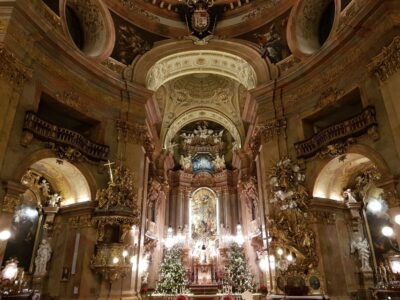
Vienna: Christmas & New Year’s Concert in St. Peter’s Church
Read our review →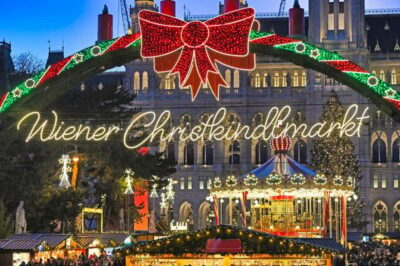
Vienna: Christmas Photoshoot with a Pro Photographer
Read our review →
This tour also sits in