
Review · WILLIAMSBURG
Christmas on the Homefront: A 1-Hour World War II Character Tour
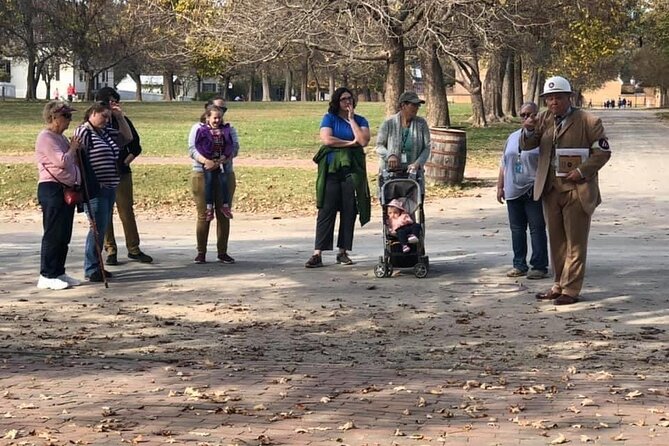
The most unusual thing about this tour is its focus on Williamsburg during World War II, not just the colonial era. You move from church to palace to college campus while hearing how local citizens, Black residents, military families, and institutions handled wartime pressure during the Christmas season.
I like the tight six-stop format and the way it connects familiar sights to less familiar subjects, especially segregation, Lena Richards, blackout rules, and USO life. I also like that this is a private tour, so your group can ask questions rather than follow a large crowd.
The main consideration is pace. Six stops in about an hour means roughly ten minutes at each site, and admission tickets to several buildings are not included. You should also be ready for outdoor walking and possible weather-related changes.
Key points to know before you book
- Six ten-minute stops: The route links Bruton Parish Episcopal Church, the George Wythe House, the Custis Tenement area, the Governor’s Palace, Merchants Square, and the Wren Building.
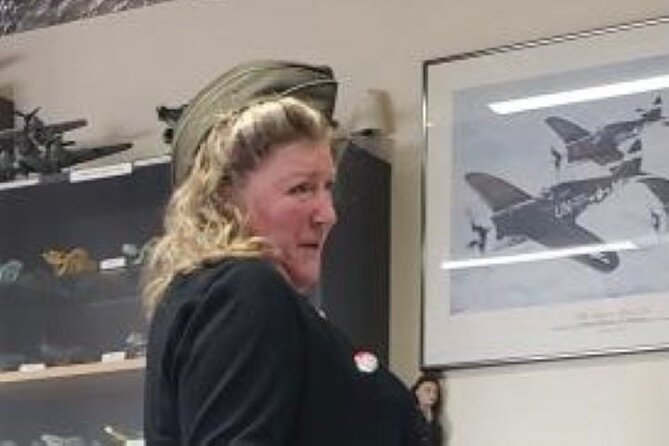
- A wartime Williamsburg focus: You’ll hear about troop housing, plane spotting, military education, segregation, blackout rules, holiday tours, movies, and the USO.
- African American history is part of the route: The discussion at West Duke of Gloucester Street includes the wartime contributions of the Black community and chef Lena Richards.
- A private English-language tour: Only your group participates, with a mobile ticket and a replica World War II Christmas card included.
- The tour ends at the Wren Building: The starting point is Bruton Parish Episcopal Church, and the finish is at 111 Jamestown Road on the College of William and Mary campus.
- Plan for outdoor conditions: Moderate physical fitness is recommended, service animals are allowed, and poor weather can lead to a new date or a full refund.
Seeing Williamsburg through a 1940s lens
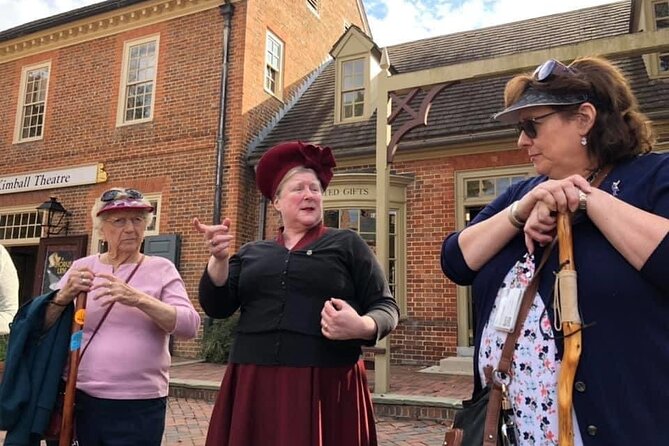
Colonial Williamsburg usually points your attention toward the 18th century. This tour asks you to look at the same streets in another way, imagining the town when the United States was at war and Christmas carried a very different weight.
The focus is the home front. That means you are not touring battlefields or studying troop movements overseas. Instead, you are learning how a historic town supported soldiers, watched the skies, provided entertainment, housed military families, and dealt with the social divisions of the period.
That shift makes the walk useful for anyone who already knows the standard Colonial Williamsburg route. The buildings remain familiar, but the questions change. Who offered space to troops? Where could soldiers spend a free evening? How did citizens respond to blackout rules? What did the college do for military families?
The Christmas setting gives the hour a clear emotional thread without turning it into a purely festive outing. A replica World War II Christmas card for the troops is included, a small item that connects the tour to the personal side of wartime life.
More quick festive outings in the USA:
- 1 Hour Christmastide Walking Tour in Virginia Past and Present
★ 4.0 · 5 reviews - 1 hour City Tour & Butchart Gardens: Christmas – Entry included!
★ 5.0 · 5 reviews - Wroclaw: Private 1h Christmas River Cruise
★ 5.0 · 2 reviews
Bruton Parish and the town’s wartime duties
The tour begins at Bruton Parish Episcopal Church on West Duke of Gloucester Street. This first stop sets up the role played by churches, local groups, and ordinary citizens during the war.
You’ll hear how organizations and residents helped house troops. That detail matters because it shifts the story away from famous officials and toward the practical work needed to support a military presence. Housing soldiers was a community task, and Williamsburg’s institutions had to respond to the demands of the period.
The church also serves as a place to discuss plane spotting. Citizens took part in watching the skies, an activity that brought the war into daily life even far from a battlefield. The idea of people looking up for aircraft gives you a strong sense of how wartime caution could shape an ordinary day.
You should not expect a long indoor visit here. Admission to Bruton Parish is not included, and the stop itself lasts about ten minutes. The value comes from the explanation of the church’s community role, not from a detailed architectural tour.
George Wythe House and military lessons in liberty
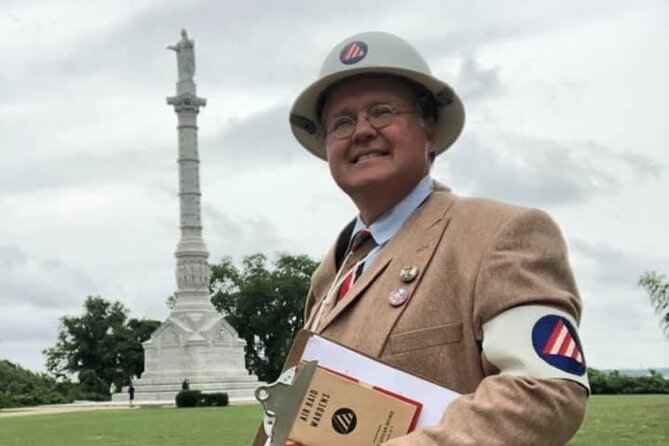
At the George Wythe House, the focus turns to the Colonial Williamsburg Foundation and its relationship with the military. The guide explains the foundation’s origins and its commitment to service members during the 1940s.
One particularly interesting subject is the classes offered to military personnel on liberty. That phrase had a practical meaning during wartime. The classes connected soldiers with ideas about government, freedom, and the principles for which the United States claimed to be fighting.
This is one of the tour’s strongest links between Williamsburg’s colonial setting and the 20th century. You are not simply hearing that the town supported the war. You are hearing how its interpretation of American liberty was used in an educational setting for service members.
Admission to the George Wythe House is not included. Since the stop lasts about ten minutes, you should think of this as a focused talk outside or near the site rather than a full house visit. If you want extensive interior time, you would need to plan that separately.
West Duke of Gloucester Street and the Black wartime story

In front of the Custis Tenement, the tour addresses segregation and the contributions of Williamsburg’s African American community during the war. This is an important part of the hour because a wartime story can easily become too narrow if it only follows soldiers, institutions, and white civic leaders.
The discussion recognizes the work and talents of Black residents while also acknowledging the limits imposed by segregation. That combination is valuable. You get a clearer picture of a community contributing to the war effort while living with unequal treatment at home.
The stop includes Lena Richards, whose culinary talents were associated with the Travis House. Her story gives the discussion a human and specific focus. Rather than treating African American contributions as a general footnote, the tour connects them to a named person and a real place in Williamsburg.
This stop is also a reminder that the home front was not the same for everyone. Military service, food service, community work, and public life were shaped by race. You’ll get more from the stop if you are willing to consider both the contributions and the barriers.
Admission is free at this location. Like the other stops, the allotted time is about ten minutes, so the guide can introduce the subject and its significance but cannot cover every aspect of Black life in wartime Williamsburg.
More Christmas Tours in the USA:
- NYC: Dyker Heights Christmas Lights & Skyline View Bus Tour
★ 4.7 · 1,192 reviews - Dyker Heights Christmas Lights Guided Tour
★ 4.5 · 920 reviews - New York City: Dyker Heights Christmas Lights Tour
★ 4.4 · 838 reviews - From Manhattan: 4-Hour Brooklyn Christmas Magic Tour
★ 4.4 · 606 reviews
The Governor’s Palace and the meaning of lights out
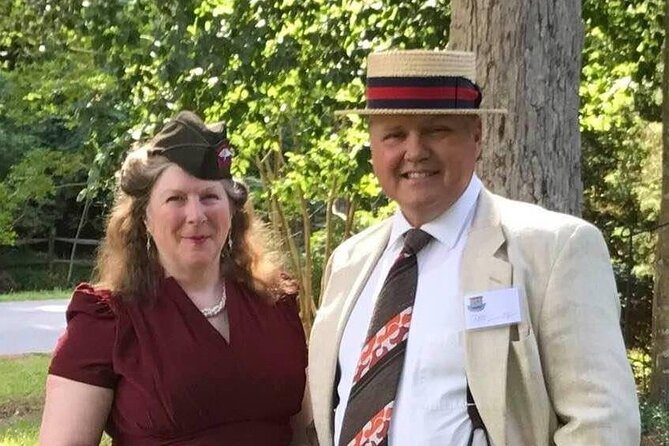
At the Governor’s Palace, the tour explores how the war affected local citizens. The subject is not only what people did for soldiers, but how military conditions altered civilian routines.
Holiday tours are part of the discussion. That detail helps place Christmas inside the wartime calendar. People still sought seasonal activities, but celebrations took place alongside restrictions, uncertainty, and concern for those serving away from home.
The guide also explains the significance of lights out. Blackout measures were meant to reduce visibility from the air, and they required people to change ordinary habits. A darkened town at night says a great deal about how a distant war could reach into homes, businesses, and public spaces.
The Governor’s Palace is one of the tour’s more atmospheric locations, but the tour is not presented as a standard palace visit. Admission is not included, and the stop lasts about ten minutes. If seeing the interior is important to you, check the separate admission arrangements rather than assuming this walking experience includes entry.
Merchants Square, movies, and the USO
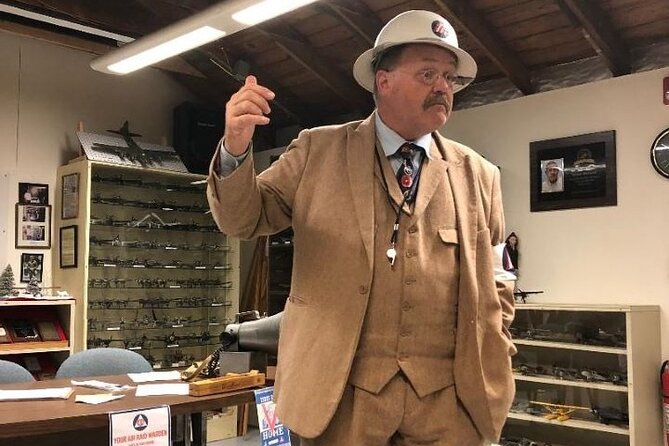
The route continues to Colonial Williamsburg’s Merchants Square, where the guide discusses entertainment for soldiers. Movies and the United Service Organizations are central here.
This stop offers a welcome change of pace from military duty and blackout rules. Soldiers needed places to relax, and entertainment was part of the town’s support system. A movie or USO program may sound ordinary, but during wartime it could provide a social outlet and a break from military routine.
The USO connection also helps explain the role of local volunteers and public spaces. The town was not simply a backdrop for troops. It offered activities that helped service members spend their limited free time.
Because the subject is entertainment, this may be one of the easiest stops for families to connect with. You can picture the basic appeal of a film, music, or a social event without needing specialist military knowledge.
The stop takes about ten minutes, and no separate admission is listed for Merchants Square. The tour remains a walking history talk rather than a performance or a visit to a functioning wartime theater, so keep your expectations in line with that format.
The Wren Building and wartime college life
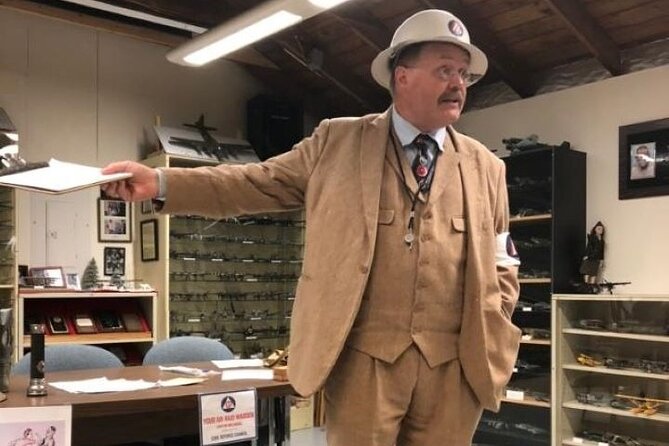
The final stop is the Wren Building on the College of William and Mary campus. The tour ends here, in front of the building, at 111 Jamestown Road.
The college’s wartime contributions include housing for military spouses, holiday fund drives, and providing junior hostesses for the USO. These details broaden the story again. A college could support the war effort through housing, fundraising, and social programs, not only through formal military training.
Housing military spouses is especially useful context. War affected families as well as enlisted personnel, and the need for accommodation followed service members into communities such as Williamsburg. Holiday fund drives also show how seasonal giving could be tied to military support.
The junior hostesses add another social detail. They helped staff USO activities, giving you a sense of how young women and civilian volunteers took part in the support network around soldiers.
The Wren Building is a logical final stop because it gathers several themes from the tour: education, family support, holiday activity, and civic duty. Since the tour ends here, you should know that you will not be returned to Bruton Parish.
What the one-hour format means for you
The tour lasts about one hour and uses six stops of roughly ten minutes each. That makes it easy to fit into a day already planned around Colonial Williamsburg, but it also means the guide must keep each subject moving.
I see the short format as a strength if you want a sharp introduction to 1940s Williamsburg. You can learn the main connections without giving up half a day. It also works well as an additional layer after seeing the colonial sites.
The tradeoff is depth. The subjects include the military, local organizations, African American history, segregation, college life, entertainment, and wartime restrictions. None can receive a long treatment in ten minutes.
This tour suits you best if you prefer a focused walk with interpretation at specific landmarks. It may be less satisfying if you want extensive access to building interiors or a slow, academic lecture on one topic.
The activity is private, so your group participates alone. That is useful in a short tour because you can ask about a detail that catches your attention without waiting for a large group to settle down. The tour is offered in English and uses a mobile ticket.
Walking, admissions, and weather planning
You should be prepared to walk between six locations in the historic center and toward the William and Mary campus. A moderate level of physical fitness is recommended, and the provided information does not describe a motorized transfer between stops.
Several sites list admission as not included. That means you should not book this expecting one bundled ticket for Bruton Parish, the George Wythe House, or the Governor’s Palace. The guide’s talks take place as part of the walking experience, while any separate building entry may require its own arrangement.
No tour price is provided here, so I cannot judge the exact cost against comparable walks. The value depends on how much you want this specific wartime angle. If you are mainly seeking access to Colonial Williamsburg interiors, the included sightseeing may not justify a higher price. If you want a private, tightly focused history walk with a Christmas and World War II theme, the format offers a more specialized use of an hour.
The experience requires good weather. If poor conditions cancel it, you can choose a different date or receive a full refund. You may cancel for a full refund if you do so at least 24 hours before the start time. Changes or cancellations made within 24 hours are not accepted for a refund.
Service animals are allowed. Other accessibility details are not provided, so you should confirm any specific mobility needs before booking.
Who will get the most from this tour
I would recommend this tour to you if you have already seen some of Colonial Williamsburg and want a new set of questions to take into the historic district. It is also a good fit for people interested in World War II beyond battlefields and generals.
Families may appreciate the clear stops and the subjects of movies, soldiers, holidays, and Christmas cards. The segregation and African American history portions also give adults a chance to discuss how wartime service and civilian life were not equal for everyone.
The tour is particularly suitable for a private group with mixed interests. One person can follow the military story, another can focus on local social history, and another can pay attention to the college and USO connections.
I would hesitate to recommend it as your only Colonial Williamsburg activity. The hour is too short to cover the whole historic district, and separate building admission may be needed. Treat it as a specialized add-on, not a replacement for a broader visit.
The strongest reason to book is the subject. Colonial Williamsburg’s 1940s home front story is easy to miss, and this route gives it a clear shape through six recognizable places. The tour’s most praised qualities are its attention to historical accuracy and active participation in the story, so you should expect a guide who wants you to think about why these events mattered, not just memorize dates.
Should you book Christmas on the Homefront?
Book it if you want a private, one-hour walk that connects Williamsburg’s familiar landmarks with troop support, blackout rules, USO entertainment, segregation, African American contributions, and military family life.
Skip it if you want a long indoor tour, extensive time at each building, or a general introduction to colonial Williamsburg. Keep the outdoor walking, separate admissions, and weather policy in mind.
For the right audience, this is a thoughtful seasonal add-on with a clear focus and a useful reminder that wartime history happened in towns, churches, colleges, kitchens, and public squares as well as on battlefields.
FAQ
How long does Christmas on the Homefront last?
The tour lasts approximately one hour.
Where does the tour begin?
It begins at Bruton Parish Episcopal Church, 201 West Duke of Gloucester Street, Williamsburg, Virginia 23185.
Where does the tour end?
The tour ends in front of the Wren Building on the College of William and Mary campus at 111 Jamestown Road, Williamsburg, Virginia 23185.
Is the tour private?
Yes. Only your group participates in the private tour.
What is included?
A replica World War II Christmas card to the troops is included. The tour is offered in English and uses a mobile ticket.
What happens if the weather is poor?
The experience requires good weather. If it is canceled because of poor weather, you can receive a full refund or choose a different date.
New this season in the USA
- Washington, DC: Christmas Tree & Holiday Lights Bus Tour★ 4.5 · 4 reviews
- Washington DC: Christmas Eve Gourmet Brunch or Dinner Cruise★ 4.2 · 6 reviews
- Downtown DC Holiday Tour: Lights, Decorations & Festive Cheer★ 5.0 · 3 reviews
- Washington DC New Year’s Day Premier Brunch Cruise★ 5.0 · 4 reviews
- Leavenworth Christmas Lights Tour from Seattle★ 4.0 · 7 reviews
- Christmas Carol Trolley Holiday Music & Lights Tour in Sarasota★ 5.0 · 8 reviews
- Festive Flavors of Pike Place Market Holiday Food Tour★ 5.0 · 5 reviews
- Totally Made-Up Hallmark Christmas Movie★ 5.0 · 5 reviews
Williamsburg Christmas Tours, side by side.
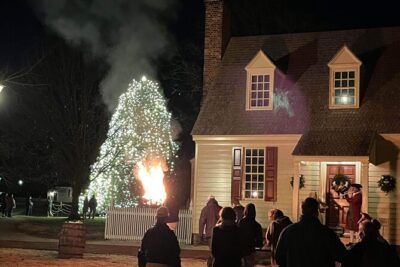
Private Colonial Williamsburg Christmas Holiday Decorations Walking Tour
Read our review →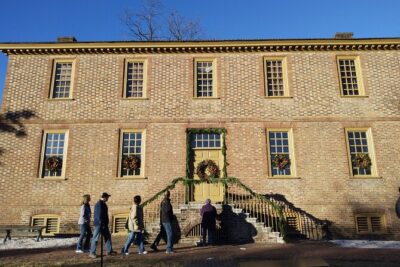
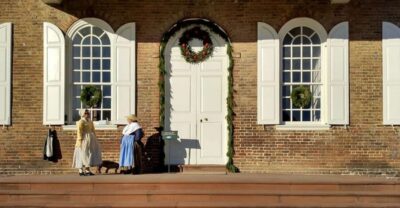

1 Hour Christmastide Walking Tour in Virginia Past and Present
Read our review →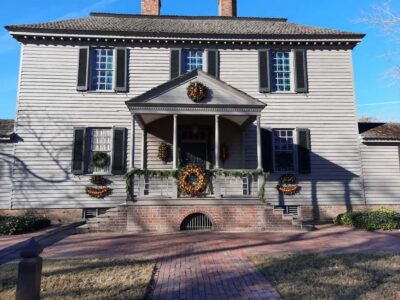
This tour also sits in