
Review · BELGIUM
From Ypres 4hr Christmas Truce and Monster Mines of Messines PRIVATE Tour
The most moving part of this private Ypres tour is the way the ground itself tells the story. At Hill 60, you stand above the Caterpillar Crater and hear how thousands of soldiers remain beneath the earth. Later, at Messines, the huge mine crater and quiet memorials make the First World War feel close and physical, not like a chapter in a textbook.
I like the private format, which keeps the focus on your questions and family connections. I also like the chance to see several far-flung sites without trying to piece them together by car or public transport. The main consideration is timing: four hours is a useful introduction, but the subject is so broad that you may want longer, especially if you have names and memorials to trace.
Key points
- Hill 60 and the Caterpillar Crater: Hear how around 8,000 soldiers were left in the earth beneath a battlefield with no individual headstones.
- The 91,000-pound Spanbroekmolen crater: See one of the most striking physical reminders of underground warfare.
- A private route with Soren: Shape the discussion around your family research, nationality, or particular memorials.
- Irish and New Zealand contributions: Visit two memorial sites that give the Battle of Messines a more personal national focus.
- The 1914 Christmas Truce site: Learn about the brief moment when opposing soldiers met in No Man’s Land.
- Pickup in Ypres: Begin at the train station or your local hotel and travel between the spread-out sites as a passenger.
Why this four-hour Ypres tour works

The Ypres area is not one compact memorial complex. Battlefield sites, cemeteries, craters, and national monuments are spread across the countryside around the city. That makes a guided drive especially useful. You can cover Hill 60, Messines Ridge, Spanbroekmolen, the Island of Ireland Peace Park, the Christmas Truce Memorial, and Hyde Park Corner Cemetery without spending your limited time navigating.
You travel in a private group of up to four people, so this is a very different experience from a large coach tour. Soren can slow down for a question, adjust the conversation to your family story, or spend more time at a memorial that matters to you. One group arrived with a specific memorial in mind and a handful of possible stops. Soren built the route around those interests, then gave the group personal time at the places they cared about.
That flexibility is the tour’s strongest feature. It is not simply a list of stops. It is a chance to connect the wider Battle of Ypres and Messines with your own reason for being there.
The official duration is about four hours, and the listed stops add up to roughly an hour and 45 minutes of planned visits. The remaining time covers driving, orientation, and explanation. In practice, a personal tour can run longer if the conversation and family research call for it. That can be a benefit, but do not schedule a tight train departure immediately afterward.
More Private Christmas Tours in the world:
- New York City Christmas Lights Private Horse Carriage Ride
★ 4.5 · 237 reviews - Christmas Lights Tour of Madrid in Eco Tuk Tuk Private
★ 5.0 · 125 reviews - Christmas in New York: Private Holiday History Tour
★ 5.0 · 107 reviews
Hill 60 and the Caterpillar Crater
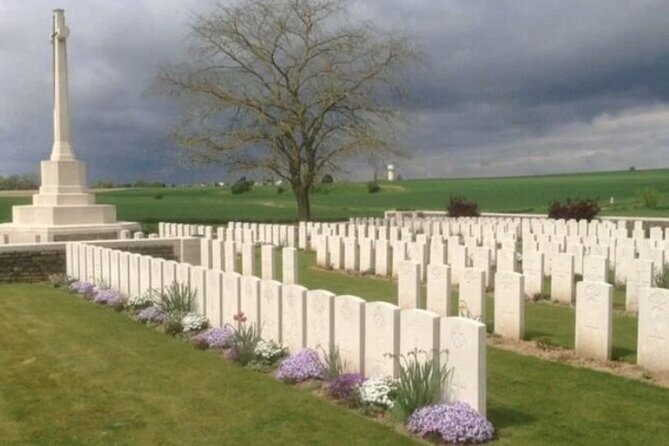
Hill 60 is the emotional center of the route. Here, Soren explains the fighting around the height and the Caterpillar Crater, including the grim fact that about 8,000 soldiers are still encased in the ground. It is often described as a cemetery without headstones, and that idea gives the stop its force.
You are not visiting a polished monument with every name neatly recorded. You are looking at damaged ground that still carries the mark of underground explosions and violent fighting. The 35-minute visit gives Soren enough time to explain what happened and gives you room to take in the site without being rushed from one photo stop to the next.
This is also where the tour moves beyond dates and commanders. The earth becomes part of the story. The absence of individual graves makes the site especially sobering for anyone researching a missing relative or a unit that fought in the area.
Hill 60 may be less comfortable than a formal memorial. The meaning comes from the place itself and from the guide’s explanation, not from a grand building or a long row of polished stones. If you want a battlefield visit that feels direct and serious, this is the stop that delivers it.
Spanbroekmolen and the 91,000-pound mine
At Spanbroekmolen Mine Crater, you see the result of underground warfare on a very large scale. The crater was created by a mine weighing 91,000 pounds, and the short 10-minute stop focuses on the tunnellers who worked beneath the front.
The visit is brief, but the crater gives you an immediate sense of the force involved. It is one thing to hear that armies dug below the battlefield. It is another to stand beside a vast hollow made by explosives hidden under the soldiers above.
This stop is a good example of why a vehicle-based tour helps. The crater is part of a wider group of sites around Messines, and reaching each one independently would take more planning. Soren links the physical feature to the men who dug, packed, and set the mines, helping you understand a part of the war that is easy to miss when attention stays on trenches and infantry attacks.
Ten minutes will not allow a long walk or extended private study. Think of Spanbroekmolen as a focused stop within a larger story, not a full tunnelling museum visit.
Messines Ridge and the New Zealand connection
The Messines Ridge memorial offers a chance to look at the battle through New Zealand’s contribution. The 15-minute stop is short, but the national focus makes it useful for anyone with New Zealand family connections or an interest in how different forces were remembered after the war.
A private guide can make this stop more personal than a general account of the battle. Tell Soren before setting out if you are researching a New Zealand soldier, regiment, or family name. The tour is specifically suited to that kind of preparation because the route can be shaped around your interests.
The memorial is also one piece of a larger international story. The Battle of Messines involved troops from several parts of the British Empire, and the next stop shifts the focus to Ireland. Moving between these memorials helps you see how the same battle is remembered through different national experiences.
More Christmas Tours in the world:
- London: Christmas Lights Bus Tour With Live Guide
★ 4.0 · 5,410 reviews - London by Night Bus Tour with Christmas Lights and Live Guide
★ 4.5 · 2,040 reviews - Auckland: Hobbiton Movie Set Day Trip with Festive Lunch
★ 4.8 · 1,431 reviews - Paris: Tootbus Open-Top Christmas Bus Tour
★ 4.0 · 1,365 reviews
The Island of Ireland Peace Park

The Island of Ireland Peace Park brings the Irish contribution into view. Its 15 minutes are enough for an explanation of the site and its meaning, especially if you have Irish family history to explore.
This is a valuable part of the tour because the subject is not reduced to a single national story. Ypres and Messines were shaped by soldiers from many places, and the Irish memorial gives you a clear way to consider that broader picture.
If you have a relative connected with Irish service, bring the name and any unit information you have. The tour provider is open to tailoring the route, and the guide’s role is especially helpful when you arrive with a personal question rather than a fixed list of famous sights.
The stop is not designed as a long independent visit. Its strength is the context Soren provides and the way it fits between the New Zealand memorial and the later Christmas Truce story.
The Christmas Truce Memorial
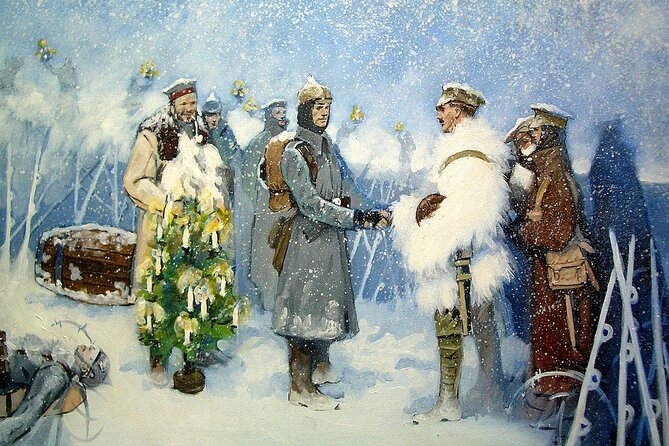
The Christmas Truce Memorial marks the ground associated with the remarkable Christmas 1914 moment when soldiers on opposing sides met in No Man’s Land. The visit lasts about 15 minutes and focuses on the story and the place where it happened.
The subject can easily become sentimental. A good guide needs to explain both the humanity of the moment and its limits. Here, the value lies in connecting the story to the actual ground rather than treating it as a floating holiday legend.
You will hear how soldiers briefly put aside their differences and met across the front during Christmas. The memorial gives the story a physical setting, which makes it easier to think about the men involved as people living in awful conditions, not simply names in a military timeline.
This stop may be the most approachable for families or for anyone new to First World War sites. It offers a human story without losing the seriousness of the war around it. At the same time, anyone looking for a long examination of the truce should remember that the planned visit is only 15 minutes.
Hyde Park Corner Cemetery and personal remembrance
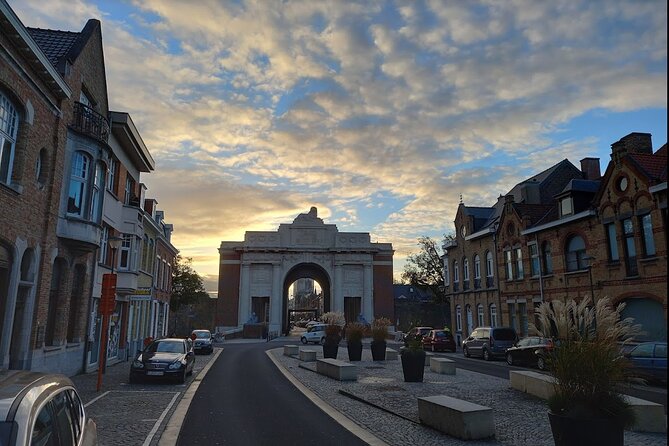
The final listed stop is Hyde Park Corner Commonwealth War Graves Commission Cemetery. Here, Soren points out the Hyde Park Corner Memorial, the grave of an England rugby captain, and twin brothers buried side by side.
These details give the cemetery a personal scale. Military cemeteries can blur into rows of names and stones, especially when you visit several in one day. Looking for the grave of a sports captain or seeing brothers buried together gives you specific human stories to hold on to.
The 15-minute visit is enough for an introduction and a few important points. If you have a particular grave or name in mind, tell Soren in advance. The private setup makes it easier to include a relevant remembrance than it would be on a fixed group route.
This is also a suitable final stop because it brings the tour back from huge craters and battlefield operations to individual lives. Hill 60 shows the scale of loss. Hyde Park Corner shows what that loss meant for families.
Soren’s guiding style and the value of a private car
The guide, Soren, is the key reason this experience suits serious family research. He explains the Siege of Ypres and the Battle of Messines in detail, but the route is not limited to a standard speech. You can ask questions as you go, and you can share the names, nationalities, or memorials that matter to your group.
One group expected four hours but stayed substantially longer because Soren did not cut corners. That does not guarantee every outing will run late, but it tells you how the private format can work in practice. If you are trying to fit a cemetery visit into a tight schedule, make your time limit clear at the start.
The vehicle also solves a practical problem. These sites are spread out, and the tour lets you see them as a passenger rather than spending your energy finding each location. Pickup is available at Ypres train station, where Soren can meet you when your train arrives, or at a local hotel or bed-and-breakfast.
The tour is offered in English. It is listed for groups of up to four people, making the $532.32 group price easier to assess. For four people, that is about $133 per person. For two people, the per-person cost is much higher, but you are paying for a private guide and a route that can respond to your interests rather than a seat on a large shared excursion.
Who gets the best value
I would recommend this tour most strongly to people with a clear interest in the First World War, family research, or a particular national connection to the Ypres and Messines area. It is also a good choice if you have only half a day and want to cover several important sites without arranging your own transport.
The private setup is useful for couples, families, and small groups who do not want to follow a fixed script. If one person is focused on New Zealand service, another on Irish memorials, and another on the Christmas Truce, the guide can bring those threads together.
You may find the tour less suitable if you want a long, quiet visit at every site. Several stops last only 10 or 15 minutes, and the overall route is designed to give you a broad introduction. It is also not the best fit for someone seeking a museum-heavy experience, since the listed focus is on outdoor battlefield sites, craters, memorials, and a cemetery.
Most people can participate, and service animals are allowed. The meeting points are near public transport, which helps if you are arriving in Ypres by train.
Timing, booking, and cancellation
The operating hours shown for this experience are 9:00 AM to 1:30 PM, Monday through Sunday, for the period from November 15, 2021 through January 22, 2027. Confirmation is sent within 48 hours of booking, subject to availability.
Pickup is offered at Ieper train station or at local accommodation. If your hotel or bed-and-breakfast is not listed, send the provider its name and arrange the meeting point directly.
You can cancel for a full refund if you do so at least 24 hours before the start time. Cancellations or changes made less than 24 hours before the start are not accepted for a refund.
Should you book this private Messines tour?
Book it if you want the battlefield sites connected into one clear story, especially if you have family names, a national connection, or a memorial you are determined to see. Soren’s flexible approach is more useful than a standard route when your interests do not fit a simple sightseeing checklist.
The price is fair for a private group of up to four, particularly when you share it with family or friends. Just plan around the short visit times and leave breathing room after the tour. If you want personal attention, spread-out sites, and a serious look at Hill 60, the Messines mines, and the Christmas Truce ground, this is a strong choice in Ypres.
FAQ
Where does the tour begin?
You can be picked up at Ieper train station or at a hotel or bed-and-breakfast in Ypres. If your accommodation is not listed, send the provider its name and arrange pickup.
How long does the tour last?
The tour lasts approximately four hours.
How many people can join the private tour?
The price covers one private group of up to four people.
What language is the tour offered in?
The tour is offered in English.
Does the tour visit Hill 60?
Yes. You spend about 35 minutes at Hill 60, where the guide explains Hill 60, the Caterpillar Crater, and the soldiers still encased in the earth.
How long is the stop at Spanbroekmolen Mine Crater?
The planned stop at Spanbroekmolen Mine Crater lasts about 10 minutes.
Does the tour include Irish and New Zealand memorials?
Yes. The route includes Messines Ridge New Zealand Memorial and the Island of Ireland Peace Park.
Does the tour visit the Christmas Truce site?
Yes. You spend about 15 minutes hearing about the Christmas Truce and seeing the ground connected with the meeting in No Man’s Land during Christmas 1914.
Is the tour suitable for family-history research?
Yes. The private tour can be tailored to relevant family history, memorials, and personal interests.
Can I cancel for a full refund?
Yes. You must cancel at least 24 hours before the experience start time to receive a full refund.
New this season in the world
- Private New York City Christmas Walking Tour★ 3.5 · 5 reviews
- New York Christmas Holiday Lights Walking Tour★ 5.0 · 8 reviews
- New York City Christmas Holiday Lights Sightseeing Cruise★ 5.0 · 4 reviews
- NYC: Dyker Heights Christmas Lights Express from Times Square★ 5.0 · 2 reviews
- Ultimate NYC Christmas Lights At Night Walking Tour★ 5.0 · 2 reviews
- NYC: Dyker Heights Christmas Lights Express Hot Coco+Santa Cookie★ 3.0 · 4 reviews
- Christmas Lights Tour of Dyker Heights Brooklyn★ 3.5 · 4 reviews
- Dyker Heights Christmas Lights Tour from Times Square★ 3.0 · 4 reviews
Belgium Christmas Tours, side by side.
From Ypres, The Christmas Truce to Passchendaele Ypres Based WW1 private tour
Read our review →
Brussels Private & Personalized Christmas Tour with a Local Guide
Read our review →
From LIlle or Bruges, Christmas Truce to Passchendaele Ypres 1 day WW1 private
Read our review →
Brussels: Christmas Market Magic Walking Tour with a Local
Read our review →
Discover the magic of Christmas in Brussels with a local guide
Read our review →
Christmas Magic in Bruges – Private Walking Tour
Read our review →
This tour also sits in